

Why did gold FALL below $4,000 during a shooting war?
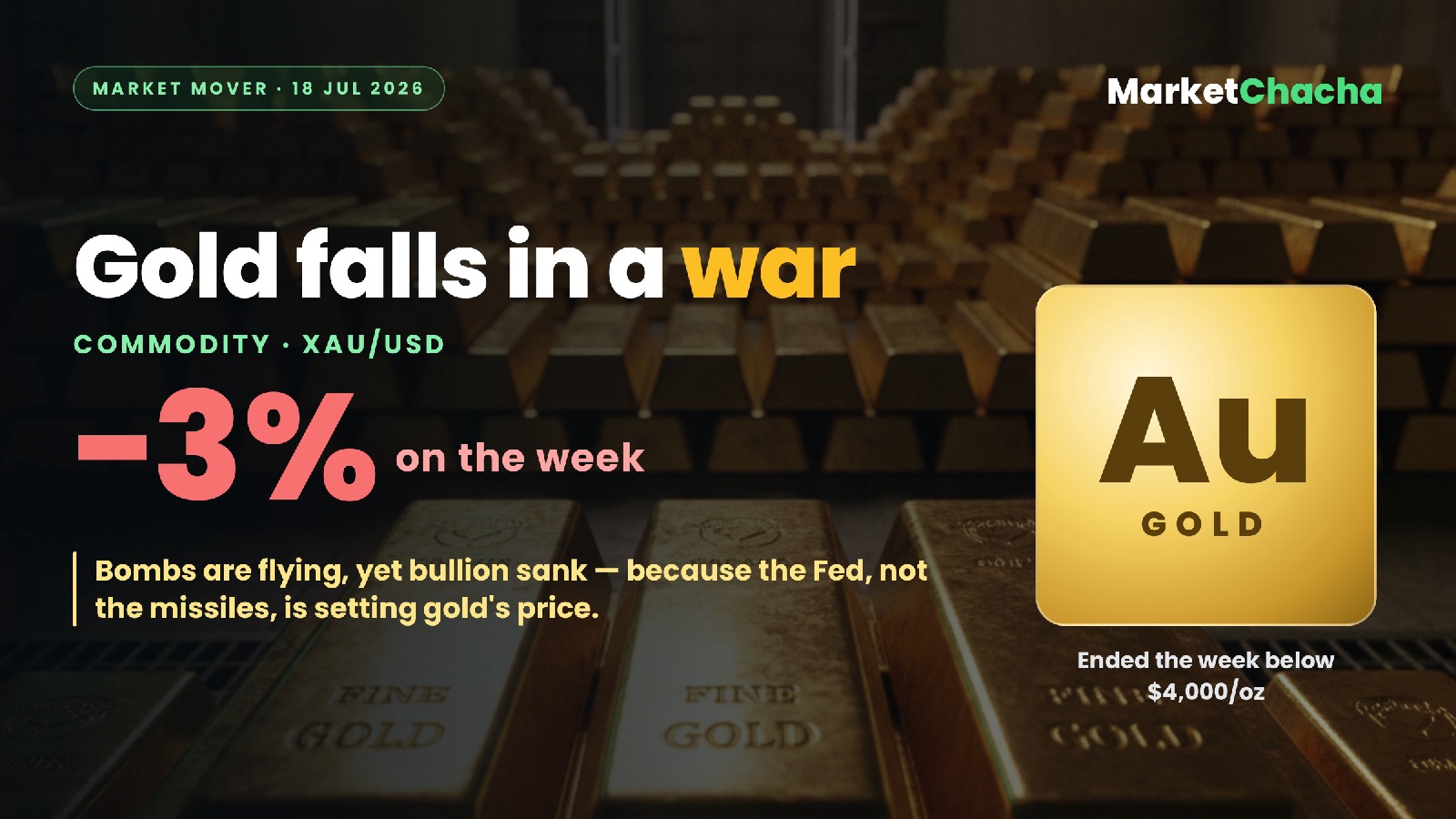
Gold just did the opposite of what the textbook promises. Through a week of fresh US–Iran strikes, bullion ended below $4,000/oz and fell about 3% on the week — its steepest weekly drop since early June, per Bloomberg and Reuters reporting. A shooting war is supposed to send money into gold. This time it did the reverse.
The simple why
The war lit a fire under oil (up roughly 12% on the week, Brent near $88), and oil is inflation fuel. Hotter inflation odds mean a higher chance the Fed — under hawkish new chair Kevin Warsh — keeps rates high, or even hikes again (traders now price about a 51% chance of a September move). Here's the catch: gold pays you no interest. When rates are set to stay high, holding a zero-yield metal costs you the return you gave up — so the money that would normally rush in as a “safe haven” (the asset investors flee to in a crisis) instead got out of the way. A firmer dollar piled on. In plain English: the rate-hike fear drowned out the war bid.
The ripple: a softer gold price pressures miners like Newmont and Barrick and the big gold ETF (GLD); for Indian readers, it cools MCX and physical gold, though a weaker rupee cushions the drop. Zoom out and it's bigger than one week — gold is down roughly 20% since the Iran conflict flared, and HSBC has already trimmed its 2026 forecast.
The one thing that flips it: a genuine escalation shock — the Strait of Hormuz actually shutting, or the conflict widening — would swamp the rate math and send the safe-haven bid roaring back above $4,000. A dovish surprise from the Fed would do the same.
As of Sat 18 Jul 2026, 6:00pm ET. Sources: Bloomberg, GoldSilver, Yahoo Finance / HSBC. For discussion and education only — not investment advice. Verify before acting.
This article is for educational and informational purposes only. It is not financial advice, investment recommendation, or a solicitation to buy or sell securities. Investing involves significant risks. I am not a SEBI-registered investment advisor. Readers should consult their own financial advisor and conduct their own research before making any investment decisions.
Comments
Join the conversation
Sign in to join the conversation.
Follow replies, add your view, and take part in the discussion.
Sign in to commentLoading comments...