

US PPI cools to 5.5% — wholesale prices fell for the first time in a year, and rate-cut bets firm up
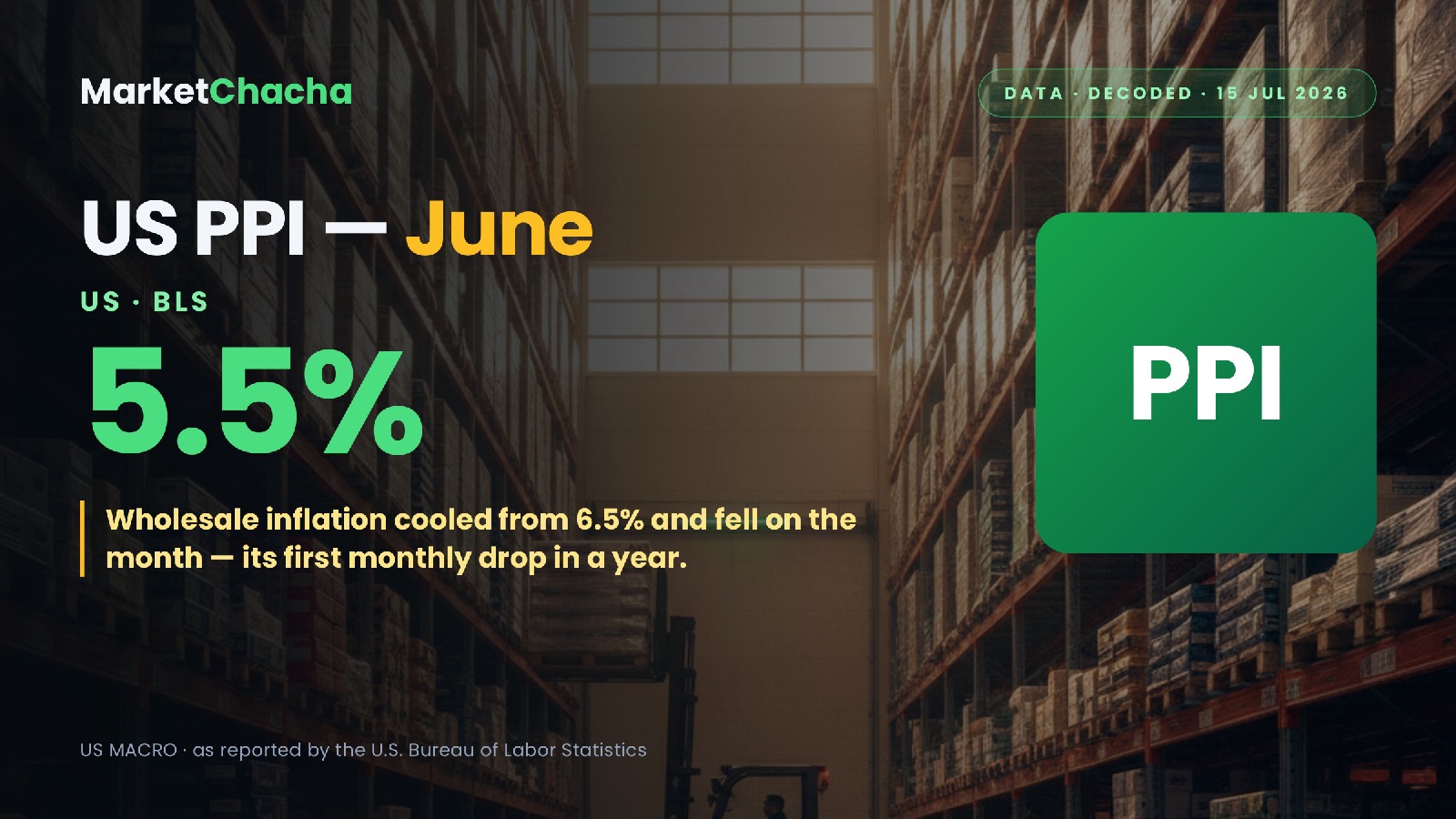
A day after consumer inflation cooled, the price data one rung up the chain just did the same. US wholesale inflation actually fell in June — the first monthly drop in a year — and it tightens the case for a Fed rate cut.
The numbers
The Producer Price Index for final demand — what US producers get paid before goods reach your cart — fell 0.3% in June from May, its first monthly decline since June 2025, per the Bureau of Labor Statistics. Over the past 12 months, final demand prices rose 5.5%, cooling from 6.5% the month before and undershooting forecasts near 6.2%.
The drop was all about goods. Final demand goods sank 1.4% on the month — the sharpest fall since July 2022 — with gasoline down 12.0% accounting for roughly two-thirds of it. Services barely budged, up 0.2%. Strip out the volatile stuff and core PPI (ex food, energy and trade services) rose just 0.1% on the month and 5.1% over the year.
It lands right after June CPI cooled to 3.5% — the two prints now point the same way.
What it means
PPI measures cost pressure at the factory gate and the wholesale counter — before it reaches consumers. When it eases, it often signals that consumer inflation has less fuel behind it a few months out. Here the softness came mostly from tumbling energy, so read it with a caveat: a chunk of the relief is cheaper oil, not a broad-based collapse in pricing power. But core still crawled at 0.1%, so the underlying trend genuinely cooled too. Crucially, PPI feeds the Fed's preferred PCE inflation gauge, so a soft print here nudges the next PCE reading lower — and gives the Fed more room to cut.
Who it touches
- Rate-cut odds and Treasury yields: a soft PPI stacked on a soft CPI strengthens the cut case; short-dated yields tend to ease as traders price a friendlier Fed.
- Rate-sensitive US sectors: lower yields typically flatter growth tech, homebuilders and REITs — the names that hurt most when money is expensive.
- Margins: falling wholesale goods prices can lower input costs for manufacturers and retailers, a potential cushion for margins even if it also signals softer demand.
- Energy: the 12% gasoline drop mirrors the oil slide — a squeeze on producers' revenue, a break for transport and consumers.
- Indian readers: a more dovish Fed usually means a softer dollar and lower US yields, which tends to keep foreign flows friendlier toward emerging-market equities, India included.
What to watch
Fed Chair Warsh is back before the Senate Banking Committee today for day two of his semiannual testimony — markets will parse it for how the FOMC reads back-to-back soft inflation. After that, the monthly PCE release is the real tell, since that is the gauge the Fed actually targets. If PCE echoes CPI and PPI, the cut conversation gets louder.
As of 9:15 AM ET, 15 Jul 2026. Sources: BLS — Producer Price Index, June 2026, Quartz. For discussion and education only — not investment advice. Verify before acting.
This article is for educational and informational purposes only. It is not financial advice, investment recommendation, or a solicitation to buy or sell securities. Investing involves significant risks. I am not a SEBI-registered investment advisor. Readers should consult their own financial advisor and conduct their own research before making any investment decisions.
Comments
Join the conversation
Sign in to join the conversation.
Follow replies, add your view, and take part in the discussion.
Sign in to commentLoading comments...