

OPEC+ just opened the taps again — 188,000 more barrels a day from August
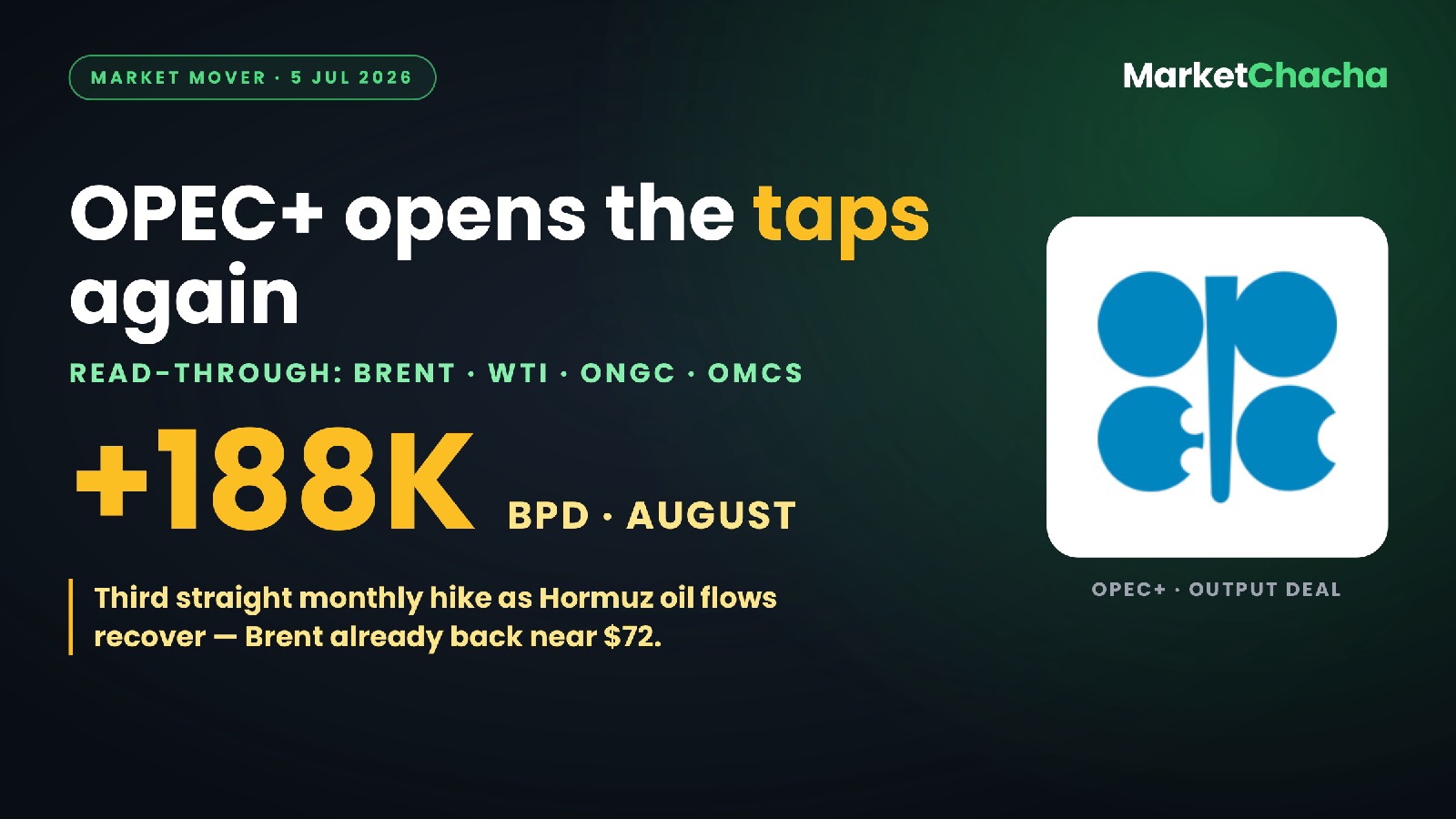
OPEC+ just agreed to pump another 188,000 barrels per day from August. Seven core members — Saudi Arabia, Russia, Iraq, Kuwait, Kazakhstan, Algeria and Oman — signed off in a virtual meeting on Sunday, per the group's official statement and Reuters. It's the third straight monthly hike, the same size as June's and July's.
Why they're doing it
The supply scare is fading. Oil exports through the Strait of Hormuz — the chokepoint that carries roughly a fifth of the world's crude — are recovering after the February conflict spike, Reuters reports. Brent peaked above $120 back then; it closed near $72 on Friday. With the fear premium gone, the group is taking back market share it gave up under earlier voluntary cuts — about 600,000 bpd returned since April. (The statement's "compensation" line means members who overproduced earlier must pump below quota for a while to make up for it, so real added barrels may be smaller than the headline.)
The ripple
More supply into a market the IEA already expects to be in surplus this half leans bearish for crude — Barclays just trimmed its Q3 Brent forecast to $69. Cheaper oil helps refiners and fuel buyers (Indian OMCs like IOC, BPCL, HPCL, plus airlines and paint makers) and squeezes producers (ONGC, Oil India, US shale, Exxon, Chevron).
The one risk that flips it
Hormuz itself. This entire decision rests on Gulf flows continuing to normalise — one fresh flare-up around Iran and the fear premium (and $90+ crude) comes straight back.
As of 23:35 IST / 14:05 ET, Sun 5 Jul 2026. Sources: OPEC statement via Egypt Oil & Gas, Reuters via CNBC, Investing.com. For discussion and education only — not investment advice. Verify before acting.
This article is for educational and informational purposes only. It is not financial advice, investment recommendation, or a solicitation to buy or sell securities. Investing involves significant risks. I am not a SEBI-registered investment advisor. Readers should consult their own financial advisor and conduct their own research before making any investment decisions.
Comments
Join the conversation
Sign in to join the conversation.
Follow replies, add your view, and take part in the discussion.
Sign in to commentLoading comments...