

Why did Intel drop ~4% after announcing a $15 billion stock sale?
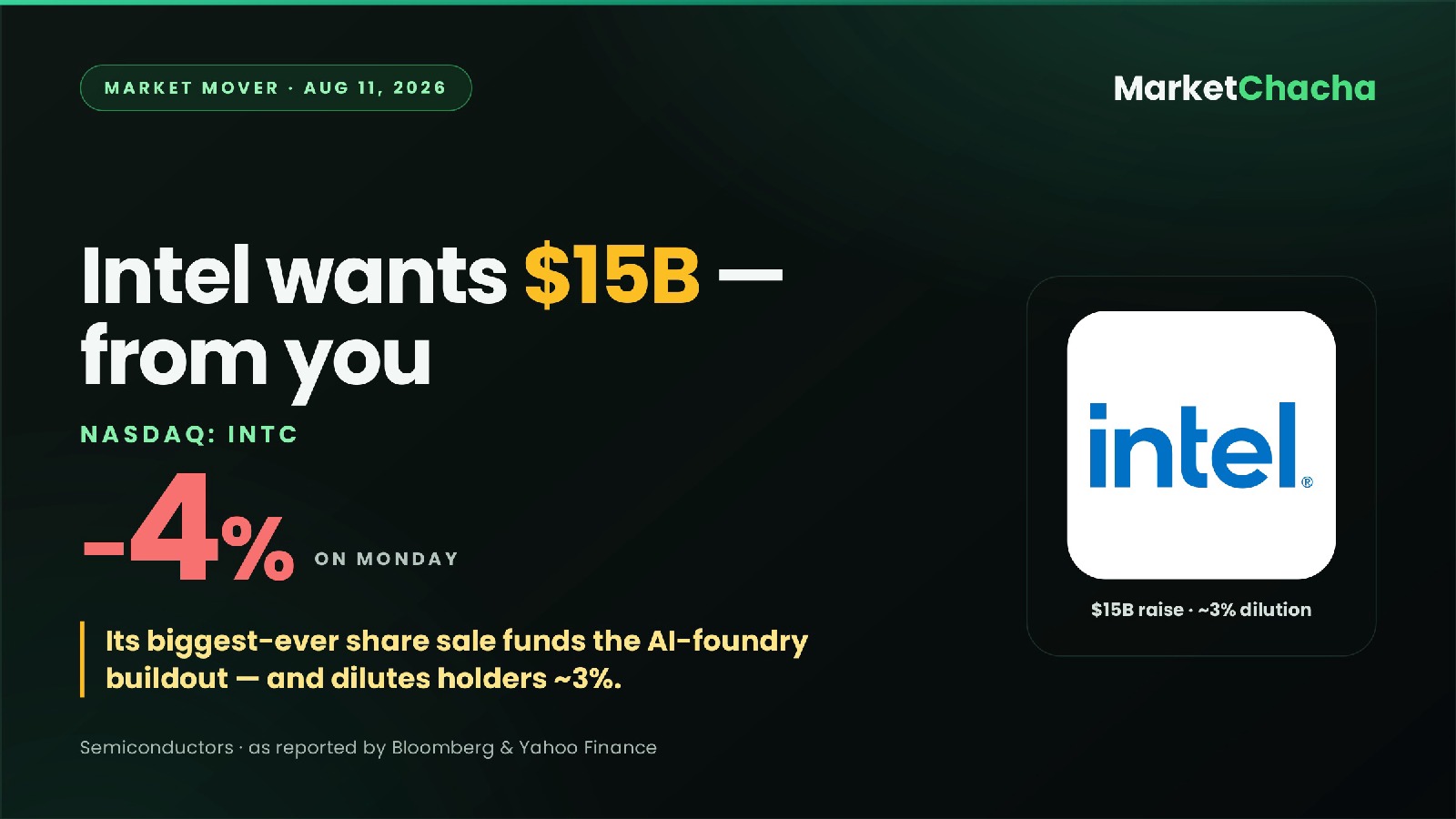
Intel (NASDAQ: INTC) fell about 4% on Monday — sliding as much as ~5% to $96.97 intraday before paring the loss — after it unveiled a proposed $15 billion underwritten sale of new common stock, per Bloomberg and Yahoo Finance. Underwriters hold a 30-day option for another $2.25 billion, which would push the raise to as much as $17.25 billion.
Why it dropped: this is dilution, plain and simple. Intel is printing new shares — roughly 3% more stock — so every existing holder's slice of the company shrinks by about that much. Tellingly, the rest of the chip pack didn't flinch: AMD, Nvidia and Broadcom held steady on the day, so this was an Intel-specific event, not a sector sell-off.
Why now — and why equity: Intel already lifted its 2026 capital-spending plan from $18B to about $20 billion, and this raise covers roughly 75% of that capex in one shot, earmarked for AI chips, custom silicon, advanced packaging and its contract-manufacturing (foundry) push. The tell is that Intel chose stock over debt: its shares have more than doubled in 2026, so selling equity near the highs is the cheapest money it can get.
The ripple: $20B of Intel capex flows straight to the toolmakers. The direct beneficiaries are the fab-equipment names — ASML (lithography), Applied Materials (AMAT) and Lam Research (LRCX) — which book the orders when Intel buys the machines that fill those fabs. More Intel spend, more tool revenue for them.
The one risk to watch: execution — and it has a concrete trigger. The bet only pays off if Intel turns this cash into a marquee external foundry customer; analyst Dan Niles flagged a foundry win as "imminent." Watch the offering's final pricing (a steep discount would signal weak demand) and any named big-customer announcement. Without one, $15 billion of fresh dilution just funds an unproven turnaround.
As of 11 Aug 2026, ~9:40 AM IST. Sources: Yahoo Finance, 24/7 Wall St, TS2. For discussion and education only — not investment advice. Verify before acting.
This article is for educational and informational purposes only. It is not financial advice, investment recommendation, or a solicitation to buy or sell securities. Investing involves significant risks. I am not a SEBI-registered investment advisor. Readers should consult their own financial advisor and conduct their own research before making any investment decisions.
Comments
Join the conversation
Sign in to join the conversation.
Follow replies, add your view, and take part in the discussion.
Sign in to commentLoading comments...