

ECB hikes to 2.50% — decoded: why they tightened while core inflation was already falling
The numbers
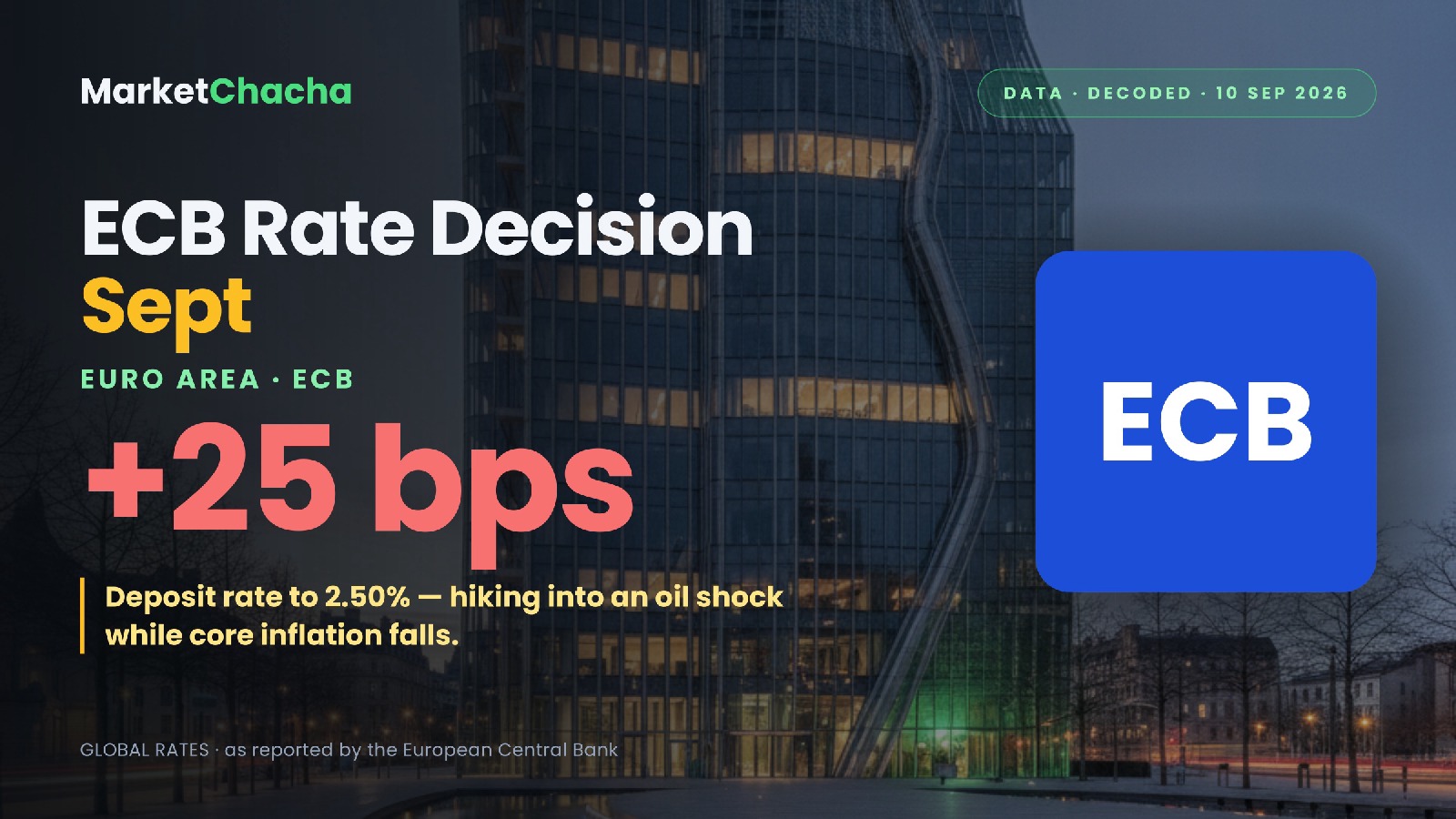
The ECB raised all three of its policy rates by 25 basis points today, as markets had largely priced in. The deposit facility rate — the one that actually sets the floor for euro money markets — goes from 2.25% to 2.50%. Main refinancing operations move to 2.65%, the marginal lending facility to 2.90%. All effective 16 September 2026. It's the second hike since June.
What forced it, from the August euro area inflation data the Council was looking at:
- Headline inflation 3.3%, up from 2.9% in July
- Energy inflation 14.3%, up from 10.3%
- Core inflation 2.4% — down from 2.5%
The staff projections moved up too. Headline inflation is now seen at 3.0% in 2026, 2.5% in 2027 and 2.1% in 2028, with core at 2.5% / 2.6% / 2.3%. Growth is pencilled at 0.9%, 1.4% and 1.5%.
What it means
Read those three inflation lines again. Headline is climbing, energy is doing all the climbing, and core is falling. Underlying euro area price pressure is easing. The ECB hiked anyway.
That's the whole decision in one line, and it's a genuinely hard call. A central bank cannot pump out more crude. Raising rates does nothing about a tanker route through the Gulf. The textbook answer to an energy shock is to look through it.
They're not looking through it because of the second-round problem: when energy stays expensive long enough, workers ask for more pay and firms rewrite price lists, and by then it isn't an oil story any more — it's embedded. The ECB's own research found adverse energy supply factors drove roughly 90% of the rise in energy inflation between January and May 2026 — and that's what makes it dangerous. It isn't demand you can cool, so the only lever left is anchoring expectations before they slip. The Council was blunt: the Middle East conflict "continues to generate inflation pressures", and inflation will stay well above target.
One thing stops this being outright hawkish: at 2.50% the deposit rate is still inside the range the ECB considers neutral. This isn't policy squeezing the economy — it's policy no longer helping it. And the Council said it is "not pre-committing to a particular rate path", keeping the next move open both ways.
Who it touches
- The euro: EUR/USD was pushing toward the 1.1660 area into the decision. Rate differentials now depend on what the Fed does next week, not just Frankfurt.
- European banks: a higher deposit rate widens the spread between what banks earn on reserves and what they pay depositors. Lenders with heavy floating-rate books benefit most.
- Euro area borrowers and housing: mortgage and corporate loan rates reprice off these levels, into 0.9% growth. That's the squeeze the Council flagged as a downside risk.
- Bunds and global duration: a second hike with more not ruled out lifts the floor under European yields, and European yields drag on global long-end pricing.
- Indian exposure: IT services firms with large European revenue books face a tougher client-spending backdrop if euro area growth stays near 1%. Auto ancillaries, pharma and specialty chemicals shipping into Europe sit on the same demand line.
What to watch
Two central banks in eight days. The Fed on 16 September — same day these ECB rates take effect — where futures are pricing roughly a 56–64% chance of a hike, and the Bank of Japan on 18 September. If all three tighten against the same oil shock, this stops being a euro area story and becomes a synchronised global one. The next euro area flash inflation print is the test of whether core keeps drifting down while headline does not.
As of 3:15 pm CET / 6:45 pm IST, 10 September 2026. Sources: European Central Bank, Euronews, Yahoo Finance. For discussion and education only — not investment advice. Verify before acting.
This article is for educational and informational purposes only. It is not financial advice, investment recommendation, or a solicitation to buy or sell securities. Investing involves significant risks. I am not a SEBI-registered investment advisor. Readers should consult their own financial advisor and conduct their own research before making any investment decisions.
Comments
Join the conversation
Sign in to join the conversation.
Follow replies, add your view, and take part in the discussion.
Sign in to commentLoading comments...