

US diesel just set an all-time record at $5.85 a gallon — and the crack spread is 5x normal
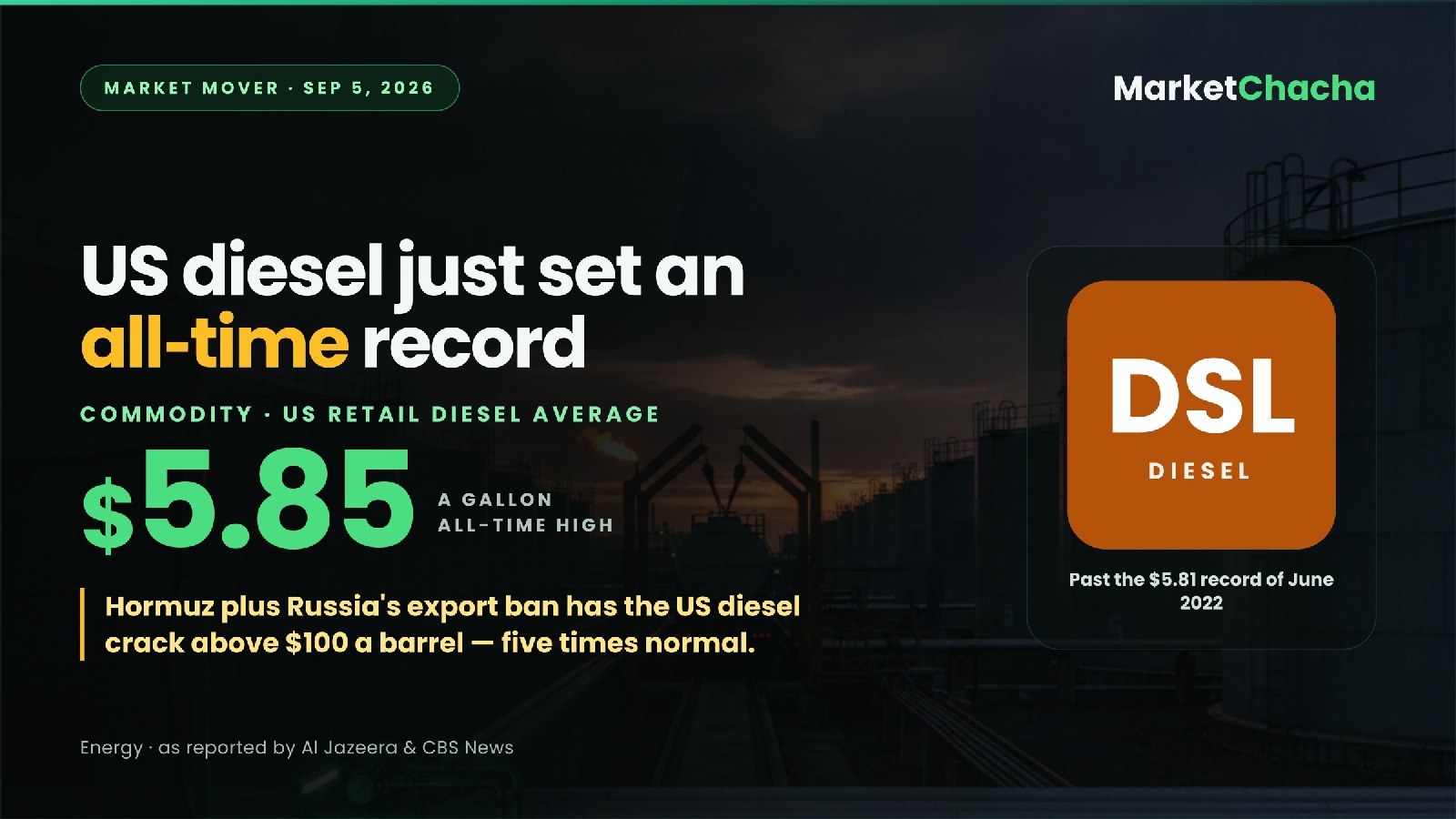
The US retail diesel average hit $5.85 a gallon this week — an all-time high, past the $5.81 record from June 2022. Regular petrol is averaging $4.15, against under $3 before the war. Brent is around $95, up roughly 45% year-on-year.
This is a refining story, not a crude story
Crude is up a lot. Diesel is up far more. The US diesel crack spread — the margin between crude in and diesel out — is above $100 a barrel, with an intraday peak above $106, and the ICE gasoil crack hit a record ~$79. That line normally trades in the teens to low twenties. Roughly five times normal.
Three separate supply hits are stacked on top of each other:
- Hormuz. On Saturday CENTCOM struck three Iranian tankers — the Downy off Kharg Island, Stark 1 near Jask, and the Kylo in the Gulf of Oman — after the Revolutionary Guard fired ballistic missiles at a US carrier and a destroyer. No American ships were hit. That is the risk premium on the crude leg.
- Russia. Ukrainian drone strikes have reportedly pushed Russian refining below 60% of capacity, and Moscow has banned exports of diesel, gasoil and marine fuel through at least 30 September. A large block of seaborne diesel simply is not clearing.
- Inventories. US distillate stocks are around 104 million barrels, about 14% below the five-year seasonal average, with East Coast stocks at record lows. There is no cushion to absorb either of the above.
Who books it, who eats it
Refiners with distillate-heavy yields keep that crack as margin. Marathon Petroleum's Q2 refining margin was $36.33 a barrel against $17.58 a year earlier, on $5.1bn of net income; Valero ran $23.62 ($3.7bn) and Phillips 66 $24.08 ($3.85bn). Every dollar the crack widens lands on that line.
Trucking and rail sit on the other side. Carriers recover fuel through surcharges indexed to the published diesel average, but those reset on a lag — a spike this fast is carrier margin first and customer cost second. And because diesel is the input to nearly everything that moves, it feeds goods prices with a delay, which argues against the Fed cutting.
The one thing that would flip it
Russia's export ban expires on 30 September. If Moscow lets it lapse and refinery runs recover, those barrels come back to the seaborne market and a $100 crack unwinds quickly — that level is a shortage, not an equilibrium. The weekly EIA distillate number is the tell: if stocks stop falling from ~104m barrels, the panic premium goes with it.
As of Sat 5 Sep 2026, 3:10 pm ET / Sun 6 Sep, 12:40 am IST. Sources: Al Jazeera, CBS News, Energy News Beat, The New Voice of Ukraine. For discussion and education only — not investment advice. Verify before acting.
This article is for educational and informational purposes only. It is not financial advice, investment recommendation, or a solicitation to buy or sell securities. Investing involves significant risks. I am not a SEBI-registered investment advisor. Readers should consult their own financial advisor and conduct their own research before making any investment decisions.
Comments
Join the conversation
Sign in to join the conversation.
Follow replies, add your view, and take part in the discussion.
Sign in to commentLoading comments...