

US payrolls fell 23,000 in July — the shock miss that just pulled the Fed dovish
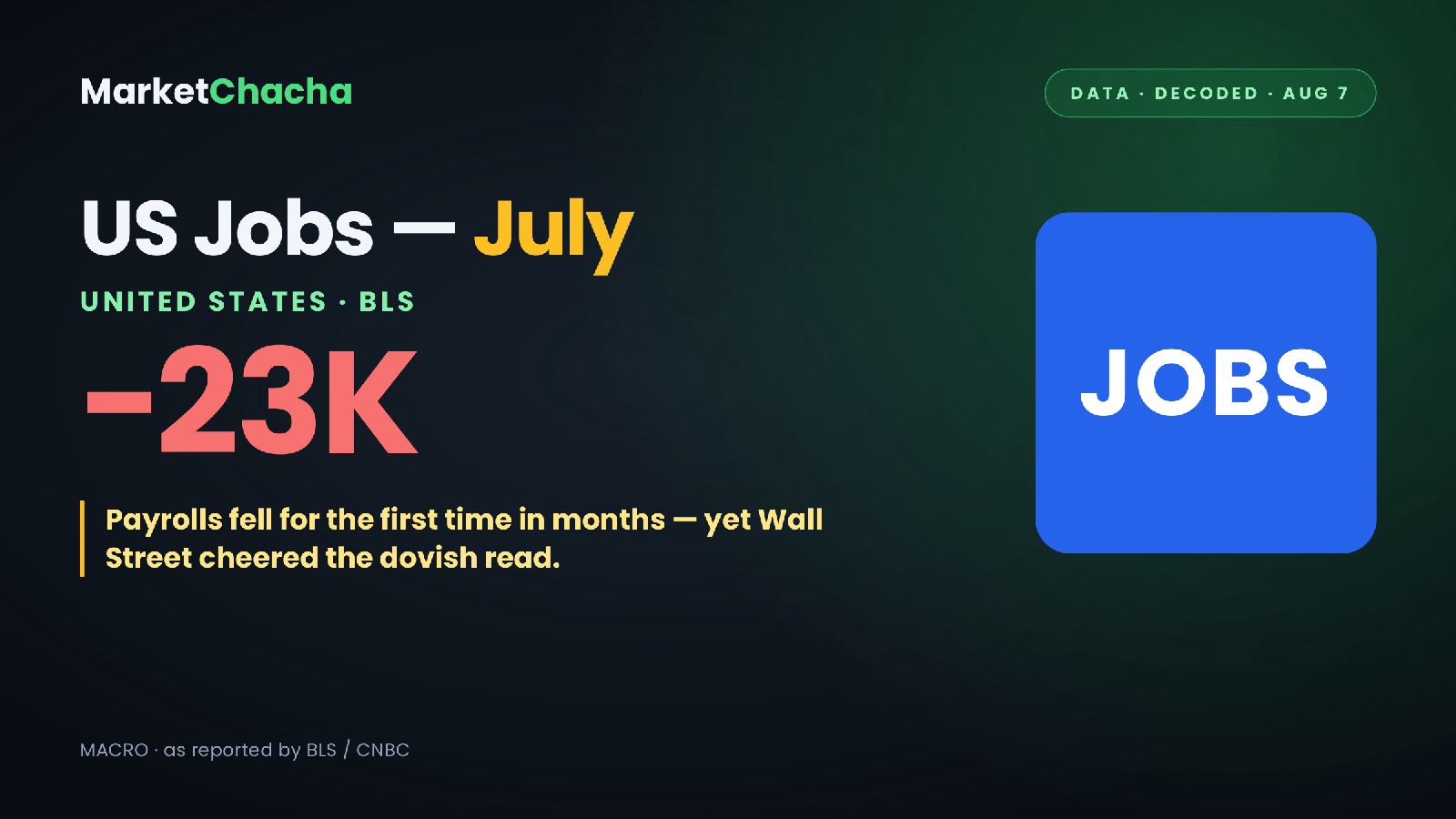
The US economy was supposed to add jobs in July. Instead it lost them. The Bureau of Labor Statistics said payrolls fell by 23,000 — the first monthly drop in months — against a Dow Jones forecast of a +83,000 gain, per CNBC. Here's what that miss actually does.
The numbers
Nonfarm payrolls came in at −23,000 versus the +83,000 economists expected, as reported by CNBC. The back months got uglier too: June was revised down to +20,000 and May all the way to +63,000 — 66,000 lower than first reported. Those cuts drag the 12-month average pace to just +34,000 jobs a month.
The odd part: the unemployment rate ticked down to 4.1%. That's not the good-news signal it looks like. Labor-force participation slipped to 61.4%, its lowest in more than five years, per CNBC — so the jobless rate fell partly because people stopped looking for work, not because they found it. Wages barely moved either: average hourly earnings rose 2 cents on the month, pulling annual pay growth to 3.2%, below the 3.5% expected. Local government education and retail trade led the losses, per Quartz.
What it means
One thing the headline hides: the jobs report is really two surveys. Payrolls (−23,000) come from businesses; the unemployment rate (4.1%) comes from households. When participation drops, the jobless rate can fall even as hiring stalls — a smaller denominator, not a healthier labor market. Read together, both point the same way: the US jobs engine is cooling fast.
That flips the Fed's script. Several policymakers had floated a possible September rate hike if inflation stayed hot. A shrinking payroll and softening wages take that off the table and revive the case for holding — or cutting. Markets read it that way instantly: the 10-year Treasury yield fell about 4 bps to 4.621%, the 2-year dropped more than 6 bps to 4.176%, and Dow futures jumped roughly 200 points, per CNBC. Odds of a Fed move in September sat near 44% (58.3% by October) on CME's FedWatch. Weak data, happy stock market — that's the "bad news is good news" reflex when traders think easier money is coming.
Who it touches
- Rate-sensitive US stocks — growth and tech names lean on falling yields; the dovish read is why futures popped.
- Bonds — Treasury yields fell across the curve, so bond prices rose; anyone holding duration got a lift.
- The dollar — greenback tends to soften when rate-cut bets build, which loosens financial conditions globally.
- Gold and silver — lower real yields and a softer dollar are classic tailwinds for metals.
- Emerging markets, including India — a dovish Fed plus a weaker dollar usually eases pressure on the rupee and can nudge foreign flows back toward EM equities.
What to watch
The Fed's dilemma is now jobs-weakness versus sticky inflation, so the July US CPI print due later this month is the tiebreaker — a cool number hands the doves the win; a hot one keeps the hawks alive. After that, the September FOMC decision confirms or flips today's reaction, and the next jobs report on Sept 4 tells you whether July was a blip or the start of a trend.
As of 9:00 am ET, Aug 7, 2026. Sources: BLS Employment Situation, CNBC, Quartz. For discussion and education only — not investment advice. Verify before acting.
This article is for educational and informational purposes only. It is not financial advice, investment recommendation, or a solicitation to buy or sell securities. Investing involves significant risks. I am not a SEBI-registered investment advisor. Readers should consult their own financial advisor and conduct their own research before making any investment decisions.
Comments
Join the conversation
Sign in to join the conversation.
Follow replies, add your view, and take part in the discussion.
Sign in to commentLoading comments...