

6 mental traps that quietly drain trading accounts (and how to spot them)
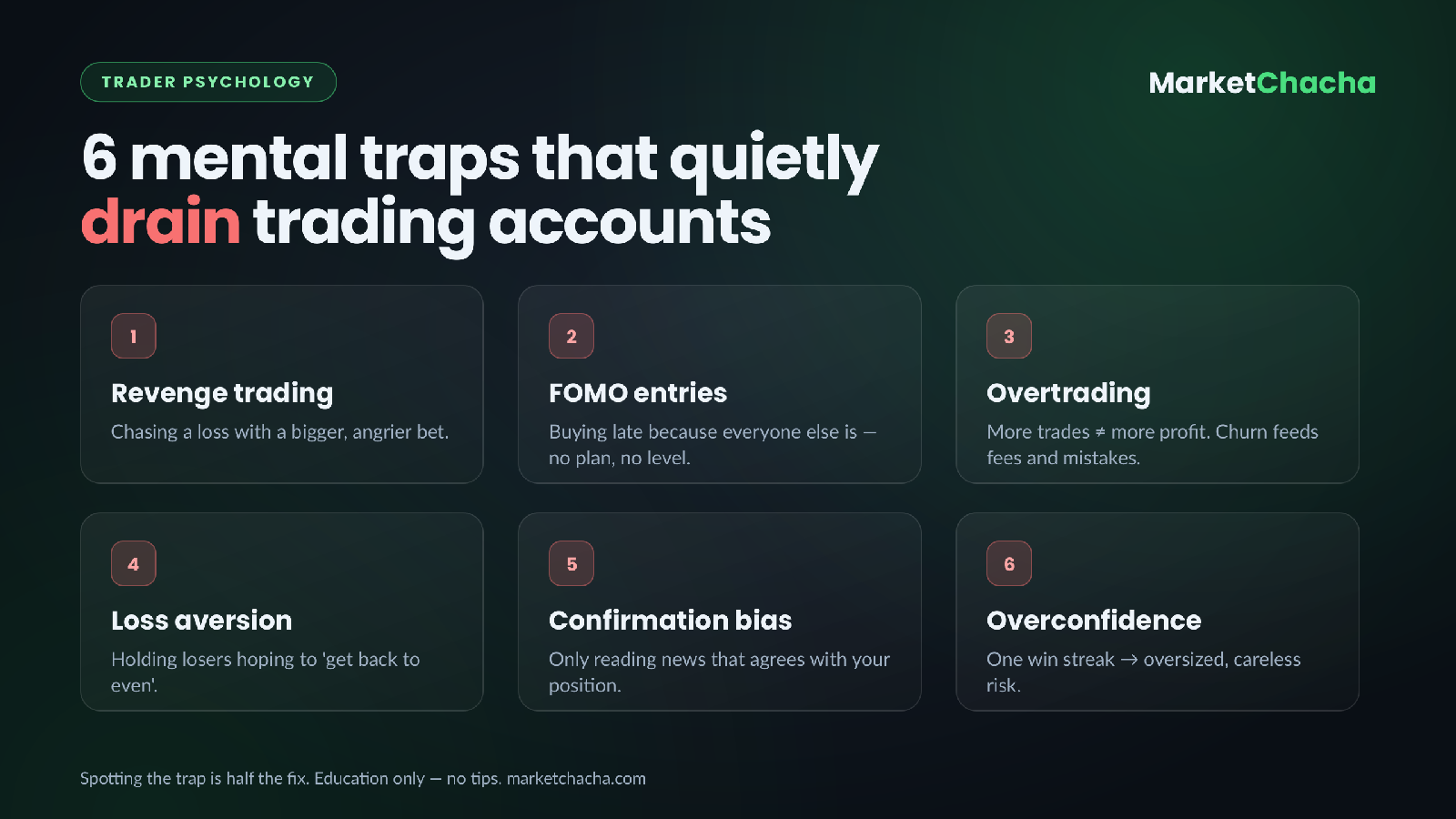
Most accounts aren't destroyed by bad analysis. They're destroyed by predictable psychology. The market is an expensive place to discover your own emotional patterns. Here are six of the most common traps — naming them is the first step to escaping them.
1. Revenge trading
You take a loss, feel the sting, and immediately jump into a bigger trade to "win it back." Now the decision is driven by emotion, not by a setup. Revenge trades are usually oversized and unplanned — the exact recipe for turning a small loss into a large one. The fix: after a loss, the rule is a pause, not a bigger bet. Some traders close the platform for the day after two losses.
2. FOMO entries
A stock is ripping higher, everyone online is celebrating, and you buy because you can't stand missing out — with no level, no plan, no exit. FOMO buys you the top. The fix: if you didn't have a reason to enter before the move, you don't have one now. Missing a trade costs nothing; chasing one costs money.
3. Overtrading
More trades feel like more work, and more work feels like more profit. It isn't. Each extra trade adds brokerage, slippage, and another chance to make a mistake. Churn is how active accounts bleed out slowly. The fix: quality over quantity. Many consistent traders take fewer, higher-conviction trades and sit on their hands the rest of the time.
4. Loss aversion (holding losers)
Psychologically, a ₹1,000 loss hurts about twice as much as a ₹1,000 gain feels good. So we hold losing positions, "waiting to get back to even," while they sink further. The fix: decide your exit before you enter, and honour it. "Back to even" is an emotional target, not a strategy.
5. Confirmation bias
Once you own a stock, you start reading only the news that agrees with you and dismissing the rest. Your research quietly becomes cheerleading. The fix: actively seek the strongest argument against your position. If it survives that, you have real conviction; if it doesn't, you just saved money.
6. Overconfidence after a winning streak
A few wins in a row and the brain whispers "I've figured this out." Position sizes creep up, risk control slips, and one oversized trade gives it all back. Markets humble winning streaks with brutal timing. The fix: keep your risk per trade fixed regardless of recent results. Your rules shouldn't change just because you're hot.
The thread running through all six
Every trap is the same mistake wearing a different mask: letting emotion override a pre-made plan. The antidote is boring but powerful — decide your entry, exit, and size before the trade, write it down, and let the plan, not the feeling, run the trade. The market doesn't reward intelligence nearly as much as it rewards discipline.
Educational content only — not investment advice, and not a recommendation to buy or sell anything. No guaranteed returns exist in markets. Always do your own research.
This article is for educational and informational purposes only. It is not financial advice, investment recommendation, or a solicitation to buy or sell securities. Investing involves significant risks. I am not a SEBI-registered investment advisor. Readers should consult their own financial advisor and conduct their own research before making any investment decisions.
Comments
Join the conversation
Sign in to join the conversation.
Follow replies, add your view, and take part in the discussion.
Sign in to commentLoading comments...