
tradingpsychology

Tradingpsychology

c/tradingpsychology

Mindset, discipline, and emotional control.

publicindicesStarted Mar 202610 posts12 members
Log in to join

Join to post, ask questions, and follow the conversations that fit your market style.

Why join c/tradingpsychology?

Real conversations

Ask what you are missing and compare notes.

Focused and relevant

One community, one cleaner thread of discussion.

Learn and grow

Read first, then post when you have a view.

ranjeet_singh
2 months ago

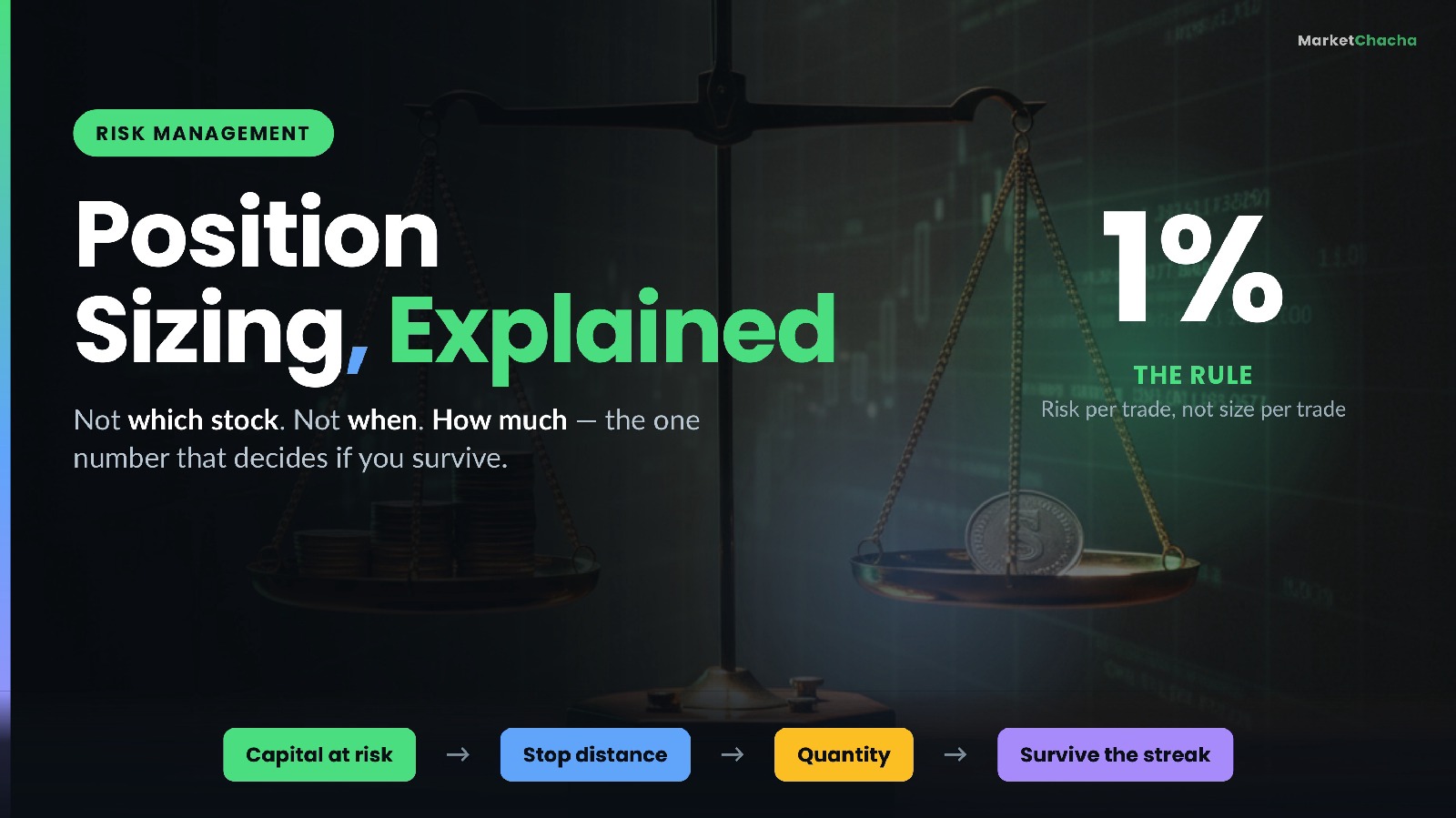
Position Sizing Explained: How Much to Buy, the 1% Rule & the Maths of Survival (Beginner's In-Depth Guide)

Position sizing is the decision of how much to buy — how many shares, lots or units — so that if the trade goes wrong, the loss is an amount you chose in advance and can absorb. It is not a view on the stock. It is arithmetic that sits between your idea and your order: you fix the rupees you are willing to lose, you measure how far away your stop-loss is, and the quantity falls out of those two numbers. Most beginners spend 95% of their effort on what to buy and almost none on how much — and it is the second question that decides whether they are still in the market a year later. This guide covers the formula, a full worked example, why the 1

Position Sizing Explained: How Much to Buy, the 1% Rule & the Maths of Survival (Beginner's In-Depth Guide)+2 more
0
ranjeet_singh
2 months ago

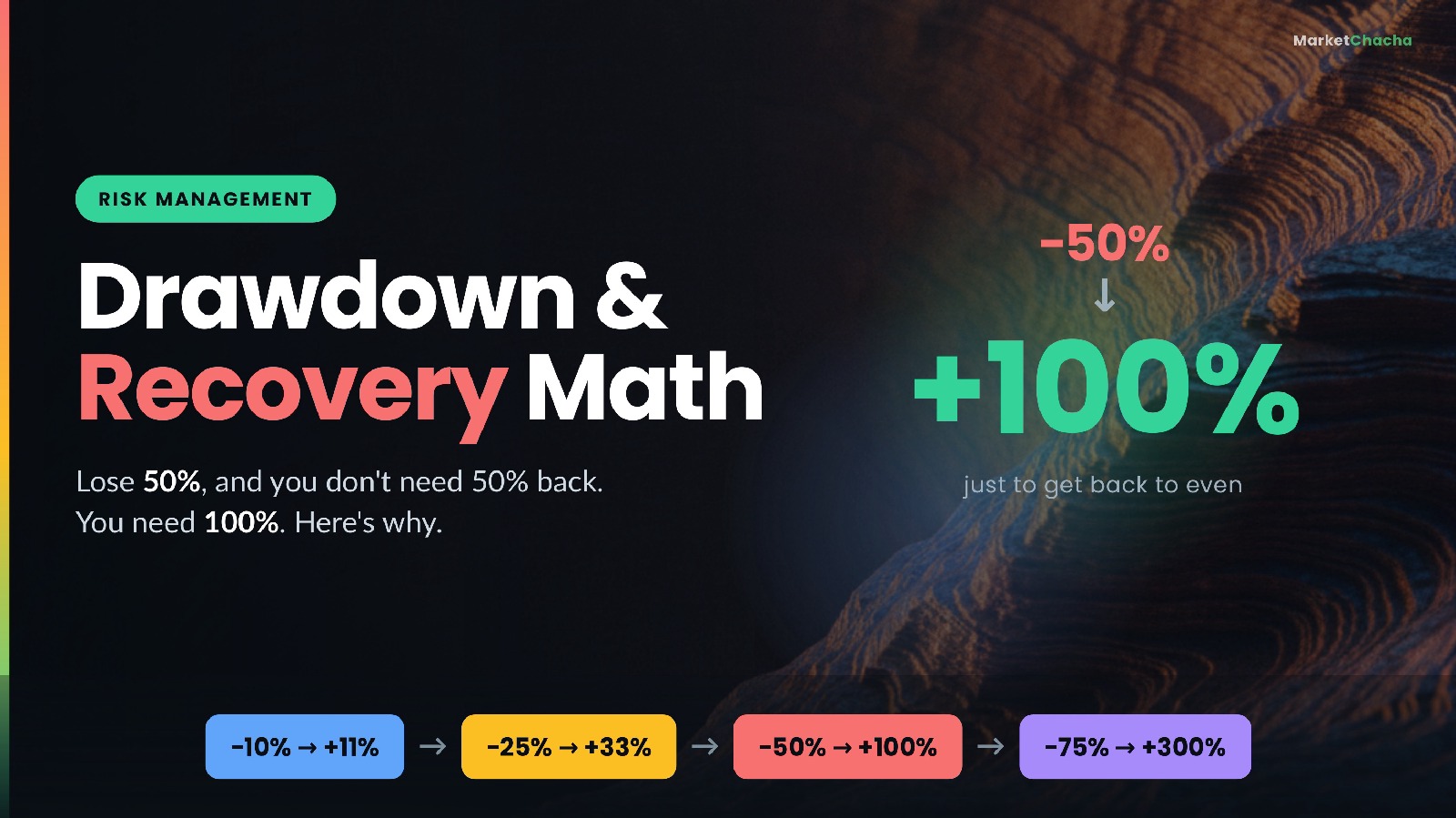
Drawdown and Recovery Math Explained: Why a 50% Loss Needs a 100% Gain (Beginner's In-Depth Guide)

A drawdown is the fall in your portfolio (or a stock) from its highest point to its lowest point before it makes a new high — and recovery math is the uncomfortable fact that the gain you need to get back to even is always bigger than the loss you took. Lose 10% and you need +11.1% to be square. Lose 50% and you need +100%. Lose 75% and you need +300%. The formula is simple: break-even gain = loss ÷ (1 − loss) . This article explains where that asymmetry comes from, works through the arithmetic step by step, shows what it does to your position sizing, and covers the mistakes it quietly punishes. What a drawdown actually is A drawdown is measu

Drawdown and Recovery Math Explained: Why a 50% Loss Needs a 100% Gain (Beginner's In-Depth Guide)+2 more
1
ranjeet_singh
3 months ago

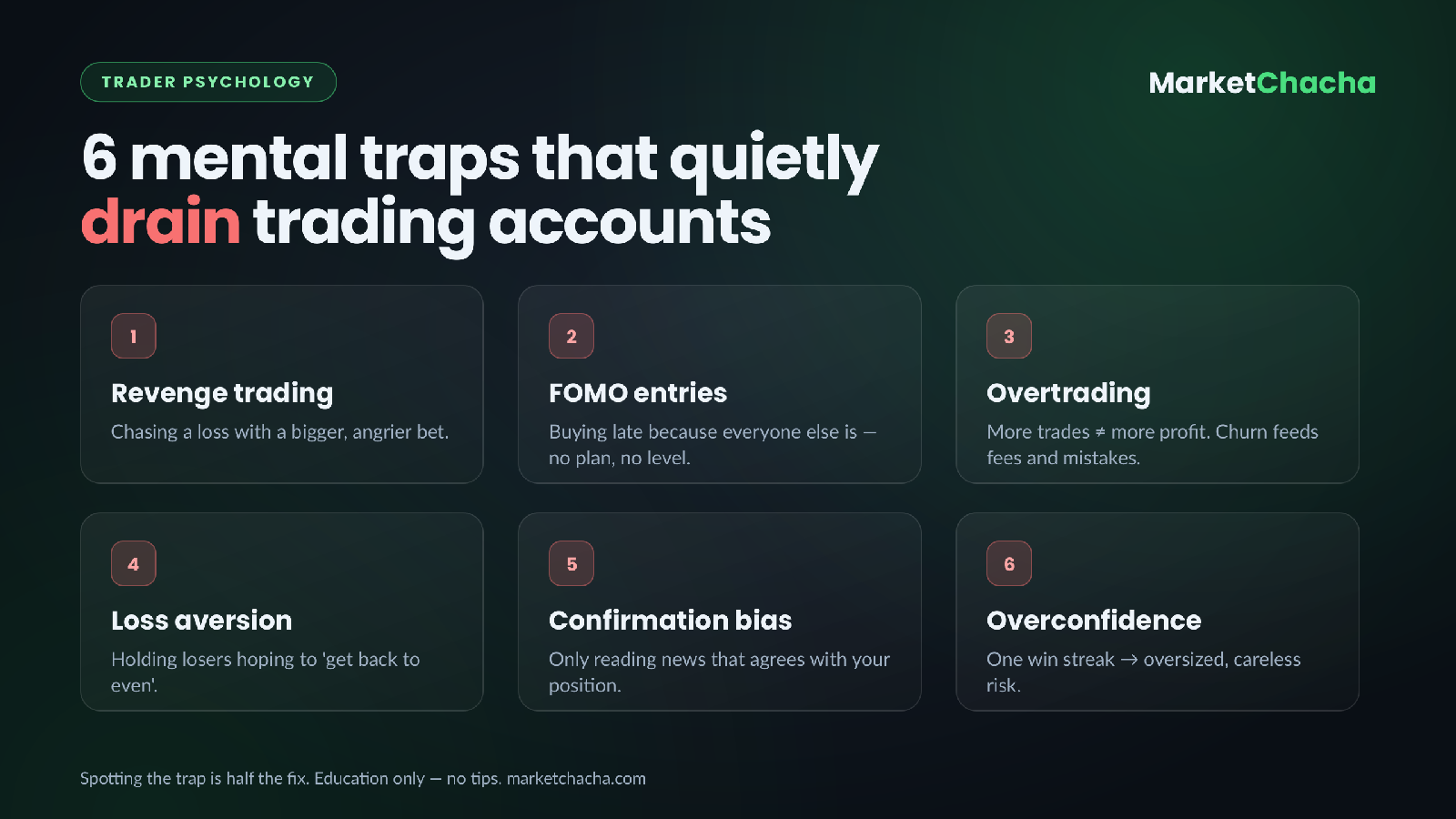
6 mental traps that quietly drain trading accounts (and how to spot them)

Most accounts aren't destroyed by bad analysis. They're destroyed by predictable psychology. The market is an expensive place to discover your own emotional patterns. Here are six of the most common traps — naming them is the first step to escaping them. 1. Revenge trading You take a loss, feel the sting, and immediately jump into a bigger trade to "win it back." Now the decision is driven by emotion, not by a setup. Revenge trades are usually oversized and unplanned — the exact recipe for turning a small loss into a large one. The fix: after a loss, the rule is a pause, not a bigger bet. Some traders close the platform for the day af

6 mental traps that quietly drain trading accounts (and how to spot them)
0