

SIAM's August data: PV sales +36.5% to a record — while car exports halved
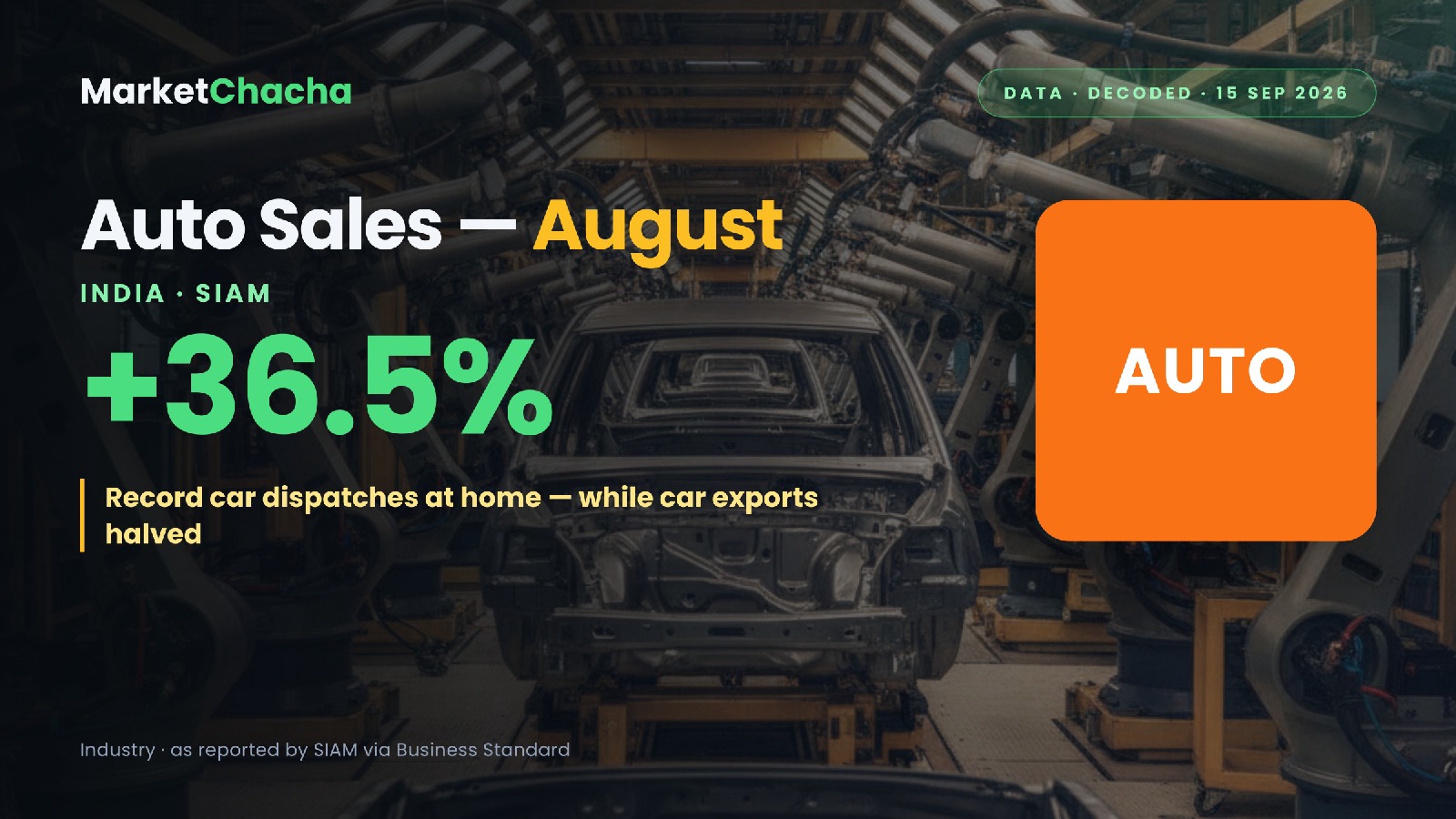
SIAM — the Society of Indian Automobile Manufacturers — published the industry-wide August numbers today, and passenger vehicle sales hit a record. Domestic PV dispatches were 4,39,309 units, up 36.5% from 3,21,901 a year ago, comfortably past the roughly 31% growth the TradingEconomics consensus had expected.
Then there's the export column, which went the other way. Hard.
The numbers
Total vehicle production across all categories was 31,57,822 units. As reported by Business Standard and ANI, the domestic breakdown:
- Passenger vehicles: 4,39,309, up 36.5% — utility vehicles 2,50,084 (+39.2%), passenger cars 1,12,011 (+23.8%), vans 11,961 (+10.9%)
- Two-wheelers: 20,34,698, up 10.5%
- Three-wheelers: 93,764, up 22.8%
- PV production: 4,54,266, up 25.7%
And exports:
- PV exports: 68,230, down 17% from 82,246
- Passenger car exports: 21,181, down 51.5%
- Utility vehicle exports: 46,400, up 23.7%
- Two-wheeler exports: 5,55,292, up 28.5%; three-wheeler exports 56,166, up 31.3%
SIAM Director General Rajesh Menon said the industry "is passing through a robust growth phase," crediting consumer confidence, resilient rural markets and improved financing.
What it means
Two things the headline percentage won't tell you.
First, the caveat that trips up almost everyone: SIAM's passenger vehicle figures exclude Tata Motors, BMW, Mercedes-Benz, Jaguar Land Rover and Volvo. So this is not the whole Indian market, and if you try to reconcile it against the sum of individual carmakers' press releases, it won't add up. It's an industry index with a known hole in it, not a census.
Second, read the export split rather than the export total. Passenger car shipments abroad fell by half, while utility vehicle shipments rose nearly a quarter. That is the shape of a structural change: India spent two decades as the world's small-car workshop, and it is turning into an SUV exporter instead. A 17% drop in "PV exports" reads like weakness. Underneath it, one product line is dying and another is taking over.
Part of the near-term dip is deliberate. Automakers held back export volume to stock dealer yards before the festive season, which is the highest-selling stretch of the Indian calendar.
And the base matters. August 2025 was artificially weak — buyers deferred purchases waiting for expected GST cuts on vehicles, so factories stopped shipping. These growth rates are measured against that freeze. We covered that in detail when the individual carmakers reported: August auto sales decoded.
Who it touches
- SUV-heavy makers win the mix — Mahindra & Mahindra and Maruti Suzuki sit on the utility-vehicle side that grew 39.2% at home and 23.7% abroad.
- Small-car exporters feel the squeeze — Maruti and Hyundai Motor India are India's two largest car exporters, and the 51.5% fall in car shipments lands mostly in their shipping schedules.
- Two-wheelers are the quieter story — 10.5% at home but 28.5% abroad, which flatters Bajaj Auto and TVS Motor more than domestic-tilted Hero MotoCorp or Eicher Motors.
- Ancillaries follow production, not sales — 31.57 lakh units built is the number that matters for Samvardhana Motherson, Bosch, MRF and Balkrishna Industries. Bigger vehicles also mean more content per vehicle — larger tyres, more electronics.
- Financiers — Menon named improved financing as a driver, which is the demand side for vehicle lenders like Cholamandalam Investment.
What to watch
Dispatches are wholesales — factory to dealer — not cars sold to households. The check on them is FADA's monthly retail registration data, which counts actual buyers. If registrations through the festive weeks don't keep pace, those record dispatches turn into dealer inventory instead of demand. The next SIAM print lands in mid-October and will cover the festive month itself.
Full schedule: MarketChacha calendar
As of 6:55pm IST, 15 September 2026. Sources: Business Standard, ANI. For discussion and education only — not investment advice. Verify before acting.
This article is for educational and informational purposes only. It is not financial advice, investment recommendation, or a solicitation to buy or sell securities. Investing involves significant risks. I am not a SEBI-registered investment advisor. Readers should consult their own financial advisor and conduct their own research before making any investment decisions.
Comments
Join the conversation
Sign in to join the conversation.
Follow replies, add your view, and take part in the discussion.
Sign in to commentLoading comments...