I

Insurance, Decoded

c/insurance

Health, term life, auto and home insurance — what cover you actually need, what to avoid, how policies really pay out, and how to compare them without the sales pitch. US and India. Education only, never advice.

publicgeneralStarted Jul 20268 posts3 members
Log in to join

Join to post, ask questions, and follow the conversations that fit your market style.

Why join c/insurance?

Real conversations

Ask what you are missing and compare notes.

Focused and relevant

One community, one cleaner thread of discussion.

Learn and grow

Read first, then post when you have a view.

ranjeet_singh
4 weeks ago

What does renters insurance actually cover — and what isn't covered?

Renters insurance is a policy that pays to repair or replace the things you own inside a home you don't own — and, just as importantly, covers you if you injure someone or damage their property. Your landlord's policy insures the building, not your belongings. The National Association of Insurance Commissioners (NAIC) puts it bluntly: "Your landlord's insurance will not cover your personal belongings. Only a renters policy will protect your possessions if they are damaged or stolen." In the US this cover is sold on a standardised form called the HO‑4 . Below: the four coverage parts, a worked claim with the actual arithmetic, the gaps…

What does renters insurance actually cover — and what isn't covered?+2 more
0
ranjeet_singh
4 weeks ago

Why was my insurance claim denied — and how do you actually appeal it?

The short answer: a denied claim is not a final bill. It is a decision — an "adverse benefit determination" — that your insurer made about one specific claim, and federal law gives you a formal, deadline-bound right to challenge it: first an internal appeal at the insurer, then an external review by an independent reviewer whose decision the insurer must accept. Most denials are never contested. Of roughly 85 million in-network claims denied by HealthCare.gov marketplace plans in 2024, consumers appealed fewer than 1% — and where they did appeal, about a third of denials were overturned (KFF analysis of CMS Transparency in Coverage da…

Why was my insurance claim denied — and how do you actually appeal it?+2 more
0
ranjeet_singh
1 month ago

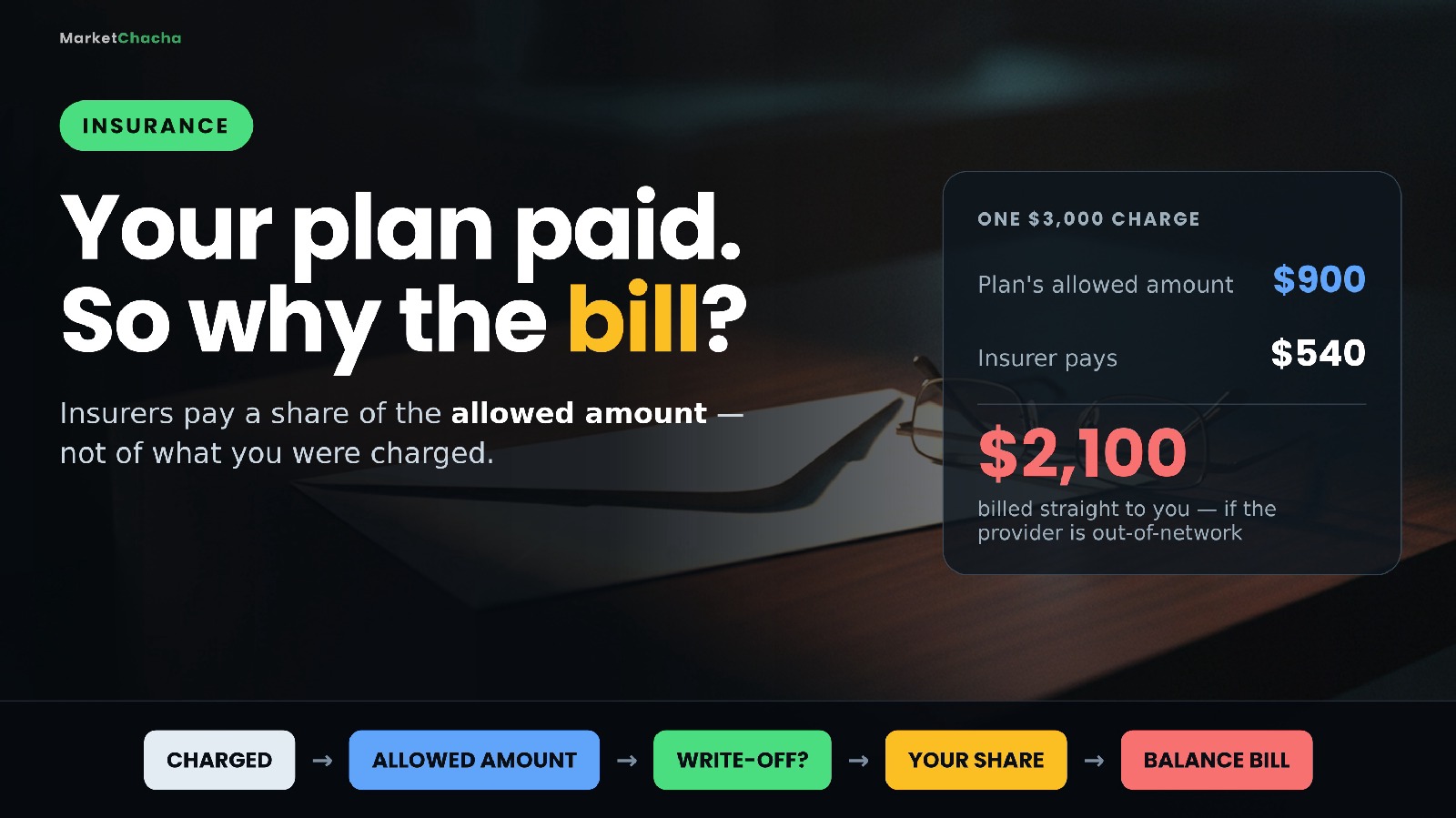
Why did I get a bill after my insurance paid? In-network vs out-of-network and balance billing, explained

The short answer: your insurance company and your doctor were never arguing about the same number. Your plan does not pay a percentage of what the provider charges . It pays a percentage of the allowed amount — HealthCare.gov defines it as "the maximum amount a plan will pay for a covered health care service." When the provider is in-network , they have signed a contract agreeing to accept that allowed amount as payment in full, so the gap between their charge and the allowed amount simply disappears. When the provider is out-of-network , they signed nothing — so the gap becomes a bill with your name on it. That bill is called balance…

Why did I get a bill after my insurance paid? In-network vs out-of-network and balance billing, explained+2 more
0
ranjeet_singh
2 months ago

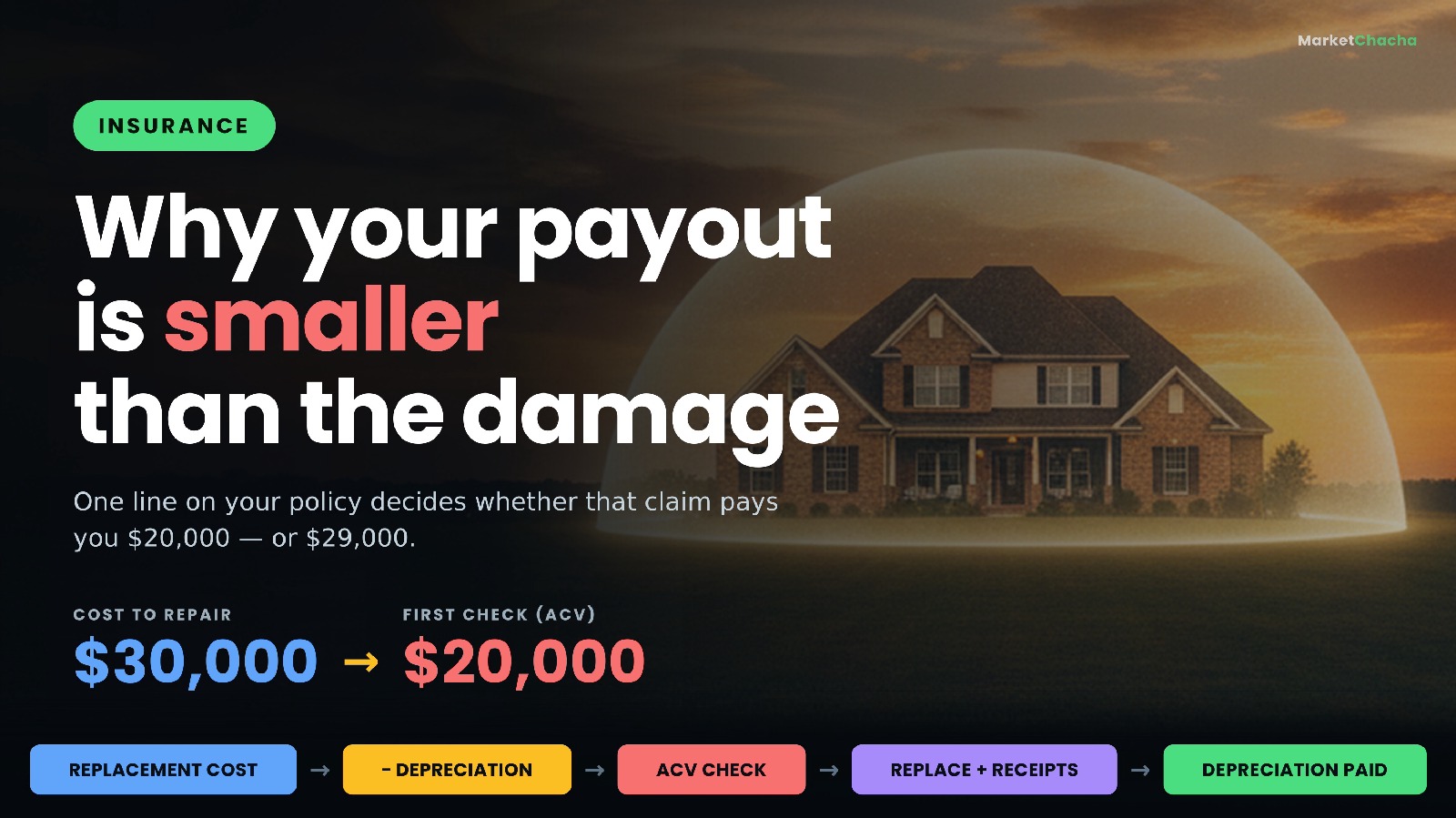
Actual cash value vs replacement cost: why is your insurance payout smaller than the damage?

The short answer: your insurance policy can price the same damage in two completely different ways. Replacement cost pays what it costs to repair or replace your property today with materials of like kind and quality. Actual cash value (ACV) pays that same amount minus depreciation for age and wear. Nothing about the fire, the storm or the burst pipe changes — only the settlement basis written into your policy changes — and on a single claim the gap between the two can run to five figures. This article walks through what each term actually means, the arithmetic on a real-sized claim, how the two-payment replacement cost process works, how dep…

Actual cash value vs replacement cost: why is your insurance payout smaller than the damage?+2 more
0
ranjeet_singh
2 months ago

How does car insurance actually work? Liability vs collision vs comprehensive, and what a deductible really does

Car insurance is a contract where you pay a regular premium and, in return, the insurer agrees to pay for certain losses — damage you cause to other people, damage to your own car, or damage from events like theft and storms — minus a deductible you agree to cover yourself. The confusing part is that "car insurance" is really several separate coverages bundled together, each doing a different job. This guide breaks down what each coverage actually pays for, what a deductible really does to a claim, how insurers price your premium, and how the same ideas map to motor insurance in India. The three coverages hiding inside "full cover…

How does car insurance actually work? Liability vs collision vs comprehensive, and what a deductible really does+2 more
1
ranjeet_singh
2 months ago

How much life insurance do you actually need? (the DIME method and the maths)

The honest answer is: enough to clear the debts your family would inherit and to replace the income they would lose — for as long as they would need it. A common rule of thumb is 10 to 12 times your annual income, but that is only a starting point. The DIME method (Debt, Income, Mortgage, Education) and the more rigorous Human Life Value approach give you a number that actually fits your life. This guide walks through all three, with the maths, so you can put a real figure on your own cover instead of guessing. Why does this matter? Because most people guess badly. In its 2025 Insurance Barometer Study, LIMRA estimated that roughly 100 millio…

How much life insurance do you actually need? (the DIME method and the maths)+2 more
1
ranjeet_singh
3 months ago

Term life vs whole life insurance: which do you actually need?

Term life insurance is pure protection: you pay a small, level premium for a set number of years, and if you die during that window your family gets a tax-free lump sum. That's it — no savings, no cash to build up. Whole life insurance is one type of permanent insurance: it never expires as long as you keep paying, and it bundles a savings pot (a "cash value") on top of the death benefit — which is exactly why it can cost roughly ten times as much for the same payout. For most people with a temporary need — a mortgage, young kids, working years to replace — term is the simple, cheap answer. Whole life is a specialist tool for a handfu…

Term life vs whole life insurance: which do you actually need?+2 more
1
ranjeet_singh
3 months ago

Deductible, copay, coinsurance and out-of-pocket max: what do they actually mean?

Four numbers decide what a year of medical care actually costs you: the deductible (what you pay in full before the plan starts sharing), the copay (a flat fee per visit or prescription), the coinsurance (your percentage share after the deductible), and the out-of-pocket maximum (the hard ceiling — once you hit it, the plan pays 100% of covered in-network care for the rest of the year). The deductible, coinsurance and cap stack in that sequence over the year; copays typically run alongside them from day one. Every one of these numbers sits on page 1 of your plan documents. Below: what each term means precisely, a full worked example with the…

Deductible, copay, coinsurance and out-of-pocket max: what do they actually mean?+2 more
1