
macroeconomics

Macroeconomics

c/macroeconomics

Interest rates, inflation, and global economy.

publicindicesStarted Mar 202621 posts24 members
Log in to join

Join to post, ask questions, and follow the conversations that fit your market style.

Why join c/macroeconomics?

Real conversations

Ask what you are missing and compare notes.

Focused and relevant

One community, one cleaner thread of discussion.

Learn and grow

Read first, then post when you have a view.

ranjeet_singh
1 week ago

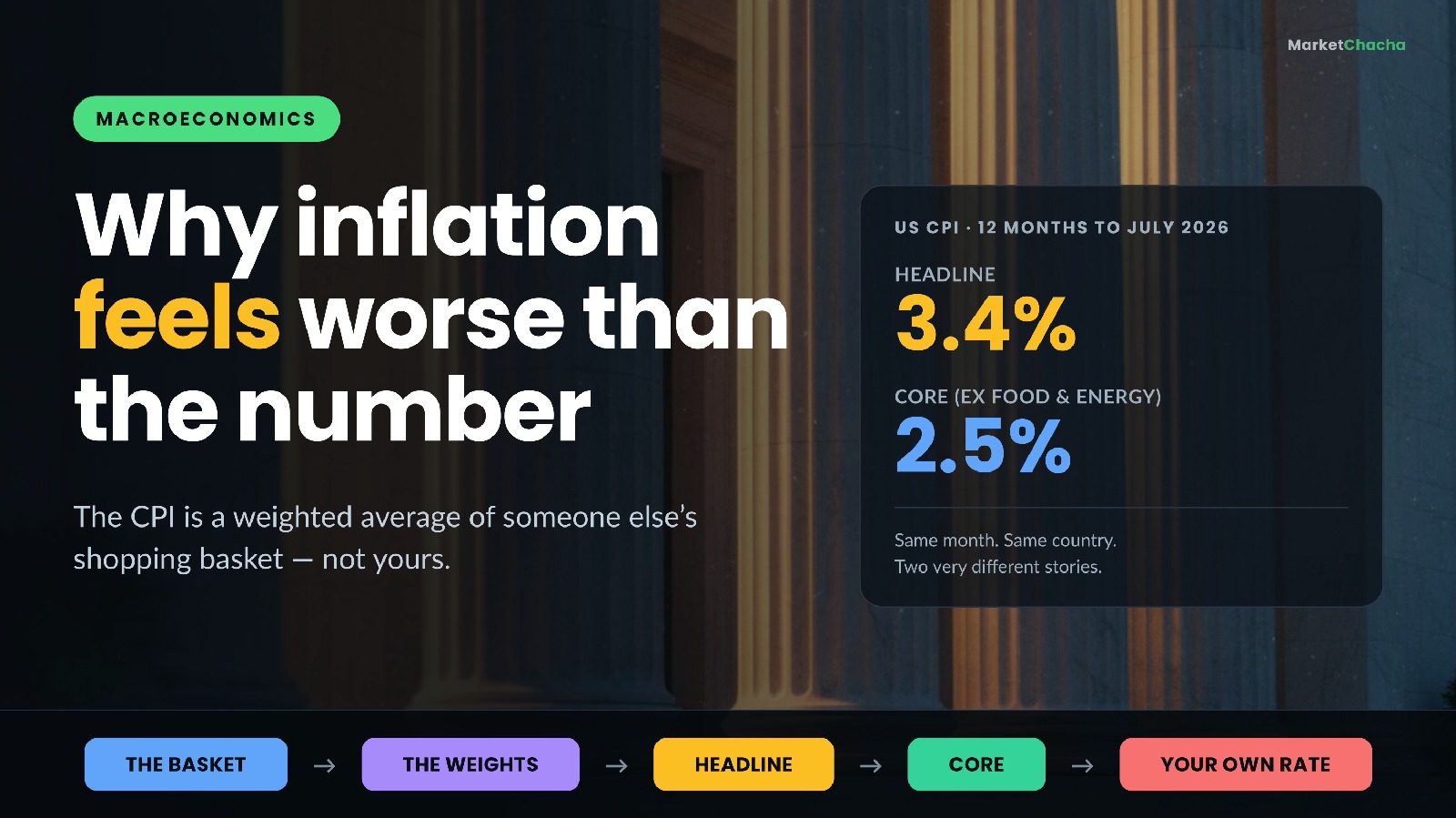
Headline vs core inflation: why does the CPI number feel lower than your actual bills?

Headline inflation is the change in the price of everything in the official basket; core inflation is the same basket with food and energy taken out. Neither one is your personal inflation rate. The Consumer Price Index (CPI) is a weighted average of what a statistically average urban household buys, so if your spending looks nothing like that average — you drive a lot, you rent, you have a fixed mortgage, you have a child in daycare — your true cost of living can be a full percentage point away from the number in the news. That gap is not a conspiracy or a measurement failure. It is arithmetic, and once you can see it, the inflation report s

Headline vs core inflation: why does the CPI number feel lower than your actual bills?+2 more
0
ranjeet_singh
2 weeks ago

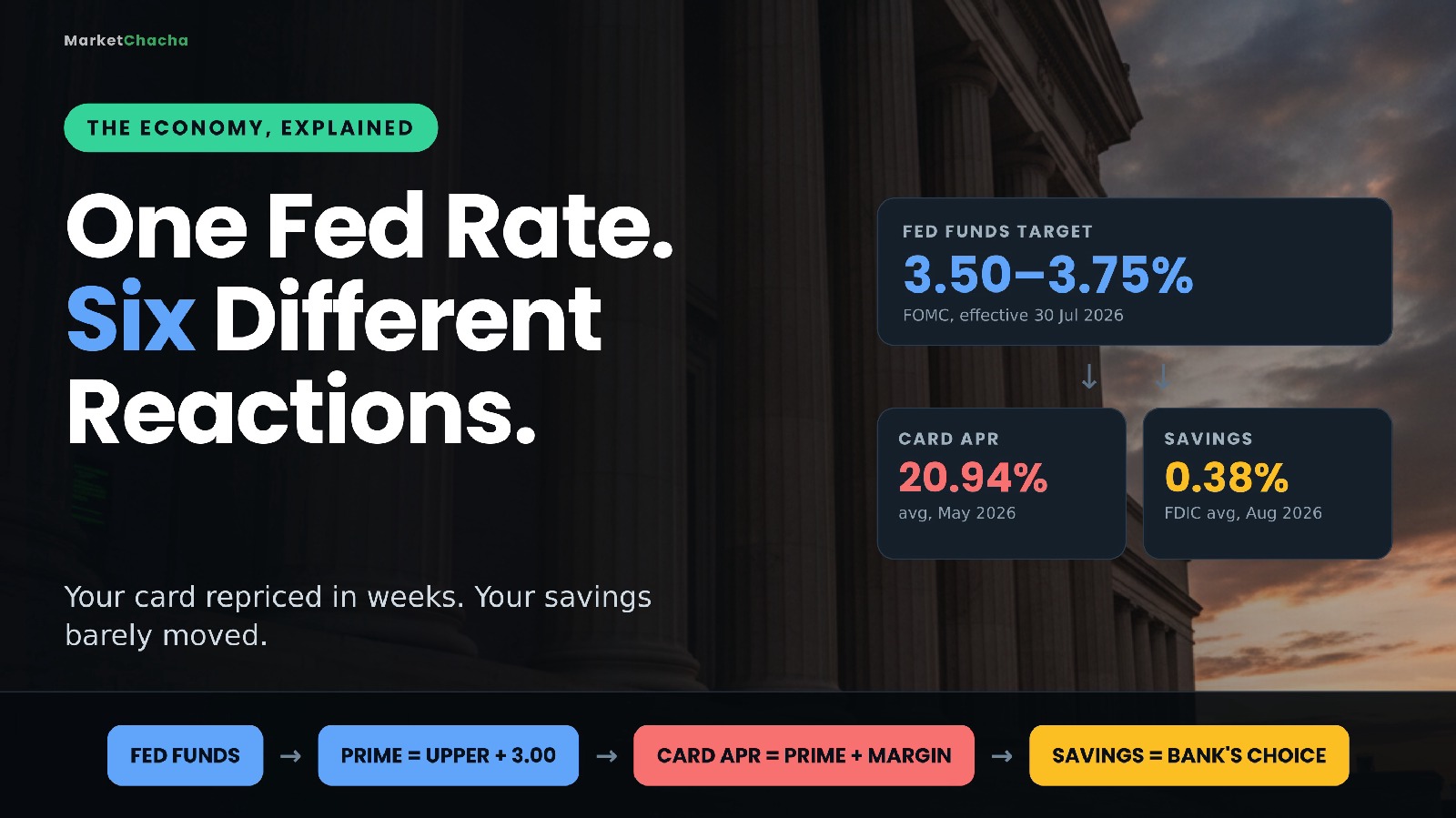
How does a Fed rate cut actually reach your savings account, your credit card and your mortgage?

When people say "the Fed raised rates" or "the Fed cut rates", the Fed has changed exactly one thing: the target range for the federal funds rate — the rate banks charge each other to borrow cash overnight. As of the FOMC's 29 July 2026 meeting that range is 3.50%–3.75% . The Fed does not set your credit card APR, your savings rate, your car loan or your mortgage. Those are separate markets that react to the policy rate at wildly different speeds — some within a billing cycle, some at the bank's discretion, and some barely at all. This article walks through each of those channels: what the Fed actually controls, a worked examp

How does a Fed rate cut actually reach your savings account, your credit card and your mortgage?+2 more
0
ranjeet_singh
2 months ago

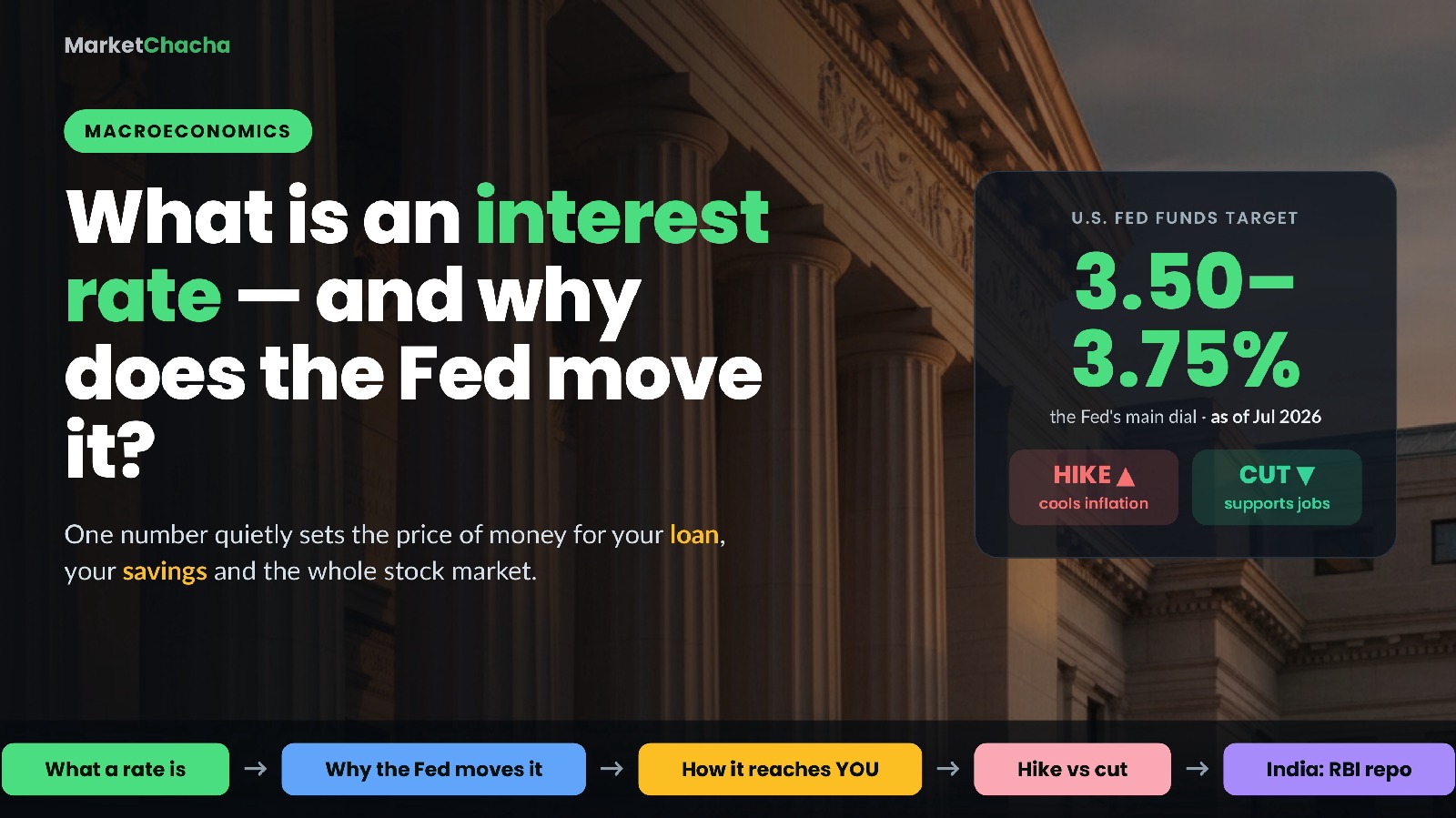
What is an interest rate, really — and why does the Fed raise or cut it?

An interest rate is the price of money — what a lender charges you to borrow, or what you get paid to save, quoted as a percentage per year. In the United States the single most important interest rate is the federal funds rate , the range the Federal Reserve ("the Fed") aims for. It sounds abstract, but almost every rate you touch — your mortgage, your car loan, your credit card, the yield on a savings account or a Treasury bill — takes its cue from it. The Fed raises this rate to cool inflation and lowers it to support jobs and growth. This guide explains, from scratch, what an interest rate really is, why the Fed moves it, exactly

What is an interest rate, really — and why does the Fed raise or cut it?+2 more
0
ranjeet_singh
2 months ago

PPI drop lines up with softer inflation path — here's the direct read

June producer prices came in cooler than expected, with a 0.3% drop and the year-over-year rate at 5.5% — the lowest in three months. This adds to the case that inflation pressures are easing on the input side. Why the numbers moved Goods prices fell 1.4% in the month. PPI tracks what factories and producers actually pay for materials and finished goods before those costs reach consumers. When that chain cools, it reduces the odds of sticky price increases later. Who feels it first Rate-sensitive areas stand to gain if the Fed sees this as evidence it can hold or ease policy. That includes banks and housing-related names that benefit from low

PPI drop lines up with softer inflation path — here's the direct read
0
ranjeet_singh
3 months ago

May CPI just cleared the highest print in 3+ years – how are you reading the rate path now?

That May CPI print just dropped and it’s the hottest annual reading in over three years, clearing the street’s expectations by a decent margin. S&P futures went from flat to down 0.5-0.6% inside a minute, sitting around 7,353 as tech got hit first. Volatility jumped right away. Traders are already flipping the script on how many rate cuts (or hikes) are left on the table for the rest of the year. The knee-jerk move feels like a classic “higher for longer” repricing, but the question is whether this sticks or gets walked back once the next couple of data points roll in. What stands out is how fast the narrative shifted. A few minutes earlier t

1
ranjeet_singh
3 months ago

May CPI at 8:30 tomorrow – how much is already baked in?

May CPI lands at 8:30 a.m. ET tomorrow and the market is already pricing a softer print on both headline and core. The question isn’t just what the number says, it’s what it does to the Fed’s next move and how equities react once the data is out. Street consensus has been leaning toward moderated readings for weeks. A cooler-than-feared number could reinforce bets on a more dovish path later this year, while anything stickier risks pushing rate-cut odds back out. That single release has a direct line to equity direction for the rest of the week. At the same time Oracle and Chewy are reporting, so the tape could get noisy even before the CPI r

0
ranjeet_singh
3 months ago

Goldman just moved their first cut to 2027 after the 172k jobs print

Goldman just shoved their first Fed cut all the way out to 2027 after that May jobs print came in at 172k. That is not a small tweak. The street had been pricing in easing starting late this year or early next, and now one of the loudest voices on the Street is saying the labor market is still too hot for any of that. The 10-year jumped straight to 4.54% on the news. Rate-sensitive names are feeling it immediately, and Bitcoin is already sliding to 62,160 while the S&P just sits near 7,584 with futures barely deciding which way to go. What changed is simple: the data came in stronger than the models were calling for. Instead of cooling, payro

0
ranjeet_singh
5 months ago

IMF just trimmed 2026 growth to 3.1%—Iran oil shock hitting harder than expected

Just caught this IMF update out of the spring meetings, and it's got that familiar gut punch feel—like we're all staring down another layer of the Iran mess without any real resolution in sight. They just shaved the 2026 global growth forecast to 3.1% from 3.3% back in January, pinning it straight on the oil shock ripping through supply chains. Oil's been the silent killer here, spiking costs that are now baked into everything from energy bills to grocery runs. Inflation outlook? Upped across the board, especially as food prices tag along for the ride. Emerging markets are in the crosshairs worst—think supply disruptions hitting exports hard,

0
ranjeet_singh
5 months ago

CPI lands at 3.3%—meets estimates but energy surge kills rate cut vibes

Just watched the March CPI drop, and damn, it's exactly what we feared—3.3% year-over-year, right on estimates, but that energy spike from Iran tensions is lighting a fire under everything. Up 0.9% month-over-month, highest annual since April '24, jumping from February's tame 2.4%. Markets dipped their toes in caution early, but S&P clawed back to edge up 0.24% at 6,840.81, Nasdaq doing better with a 0.69% pop to 22,979.07. Feels like traders are breathing a sigh of relief that it wasn't worse, but don't get too cozy. This isn't just numbers—it's the Fed slamming the brakes on those summer rate cut dreams we were all whispering about. Energy

1
ranjeet_singh
6 months ago

Middle East flare-up has inflation and recession fears colliding again

This Middle East situation is escalating fast and the macro implications feel heavier than the headlines suggest. Investors are openly calling it opening "Pandora's box" for global inflation, and you can see why. Any real disruption around the Strait of Hormuz doesn't stay local. The risk of that energy shock spreading into Europe and rolling through global supply chains has people replaying the 70s script in their heads. Higher input costs everywhere while growth gets squeezed. The tape is already showing the classic safe-haven rotation. Bond yields have eased as money flows to safety, the dollar has strengthened, and risk assets are

1
ranjeet_singh
6 months ago

$4.09 gas in a month? Iran conflict is already rewriting the inflation script

Just saw the update and had to pause. National average regular gasoline is now at $4.09 a gallon. One month ago it was $3.11. That's not a creep higher, that's a straight sprint. The Iran situation is the spark. Supply worries, Strait of Hormuz tension, and oil reacting exactly how you'd expect. This isn't some abstract geopolitics headline anymore. It's showing up at the pump and it's going to echo. Amazon is already rolling out fuel surcharges on deliveries. Smart, but it tells you how quickly these costs get passed along the chain. Mortgage rates have hit a seven-month high at the same time, layering higher borrowing costs on top of everyt

0