C

Credit Cards & Money Hacks

c/creditcards

Getting paid to spend — which cards are genuinely worth it, rewards and cashback, avoiding interest and fees, credit scores, and practical money-saving tricks. US cards first, India cards covered too. Education only, never advice.

publicgeneralStarted Jul 20269 posts3 members
Log in to join

Join to post, ask questions, and follow the conversations that fit your market style.

Why join c/creditcards?

Real conversations

Ask what you are missing and compare notes.

Focused and relevant

One community, one cleaner thread of discussion.

Learn and grow

Read first, then post when you have a view.

ranjeet_singh
4 weeks ago

What is a chargeback — and what are you actually liable for if someone uses your credit card?

A chargeback is the mechanism your card issuer uses to forcibly pull money back out of a merchant's bank account and return it to you. It is not a refund — a refund is the merchant choosing to give your money back; a chargeback is your bank taking it. And in the United States, the most you can legally be made to pay for someone else's unauthorised use of your credit card is $50 , under Regulation Z §1026.12(b). In practice, most cardholders pay $0. Below: where that $50 comes from, the two very different kinds of dispute, the 60-day deadline that decides whether you have enforceable rights at all, the exact steps to file, and how the equivale…

What is a chargeback — and what are you actually liable for if someone uses your credit card?+2 more
0
ranjeet_singh
1 month ago

Why did my card charge extra abroad? Foreign transaction fees and DCC, explained

If your credit card statement showed a charge that was bigger than the price on the tag when you shopped or travelled abroad, two hidden costs are usually to blame: a foreign transaction fee your card adds (often around 3%), and a sneakier one called Dynamic Currency Conversion (DCC) — the moment a shop terminal or overseas website asks, "Would you like to pay in your home currency instead?" Saying yes to that question can quietly add another 3–7% on top. This article explains exactly how each cost works, walks through the arithmetic on a single purchase, and shows the one habit that makes most of it disappear. What a foreign transact…

Why did my card charge extra abroad? Foreign transaction fees and DCC, explained+2 more
0
ranjeet_singh
1 month ago

What is credit utilization — and how does it actually affect your credit score?

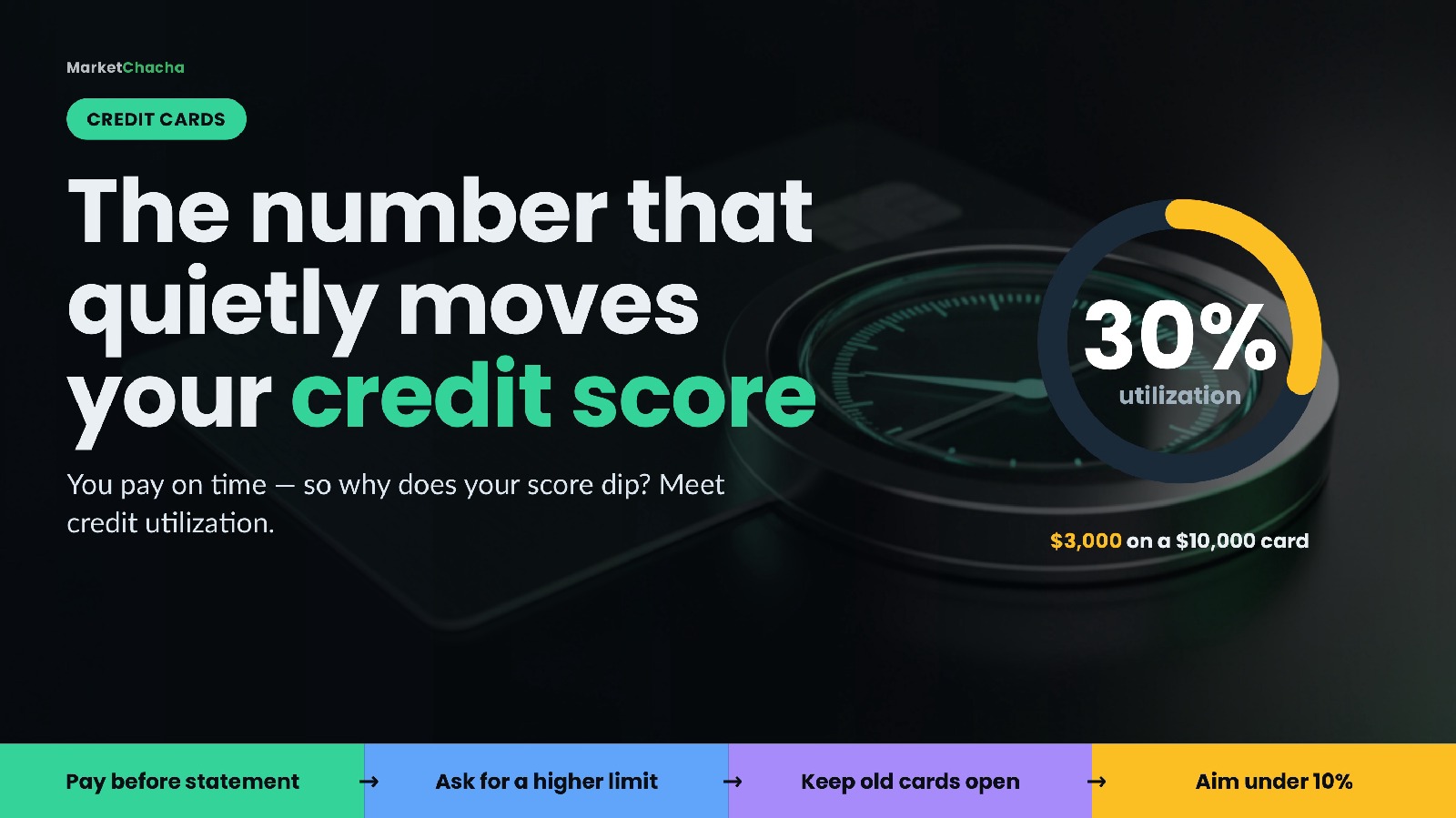
Credit utilization is the share of your available credit-card limit that you are currently using — your reported balance divided by your credit limit, written as a percentage. If you owe $3,000 on a card with a $10,000 limit, your utilization is 30%. It is one of the biggest levers on your credit score: in the FICO model, the "Amounts Owed" category it belongs to influences about 30% of your score, second only to payment history. The good news is that unlike a late payment, high utilization does no lasting damage — it is one of the few score factors you can fix in a single billing cycle. This guide explains exactly what the number is,…

What is credit utilization — and how does it actually affect your credit score?+2 more
0
ranjeet_singh
2 months ago

Is a credit card annual fee actually worth it? The break-even math, step by step

A credit card annual fee is worth paying only when the extra value the card gives you — extra rewards, plus credits and perks you would genuinely have paid for anyway — comes to more than the fee itself. The word doing all the work there is extra . Extra compared to what? Compared to a no-fee card you could have carried instead. Almost everyone who gets this decision wrong makes the same mistake: they add up all the rewards the fee card earned, see a number bigger than the fee, and conclude they came out ahead. But a free card would have earned rewards on that same spending too. The only honest question is how much more the fee card earned. T…

Is a credit card annual fee actually worth it? The break-even math, step by step+2 more
0
ranjeet_singh
2 months ago

How does a 0% balance transfer actually work — and when does the interest bite?

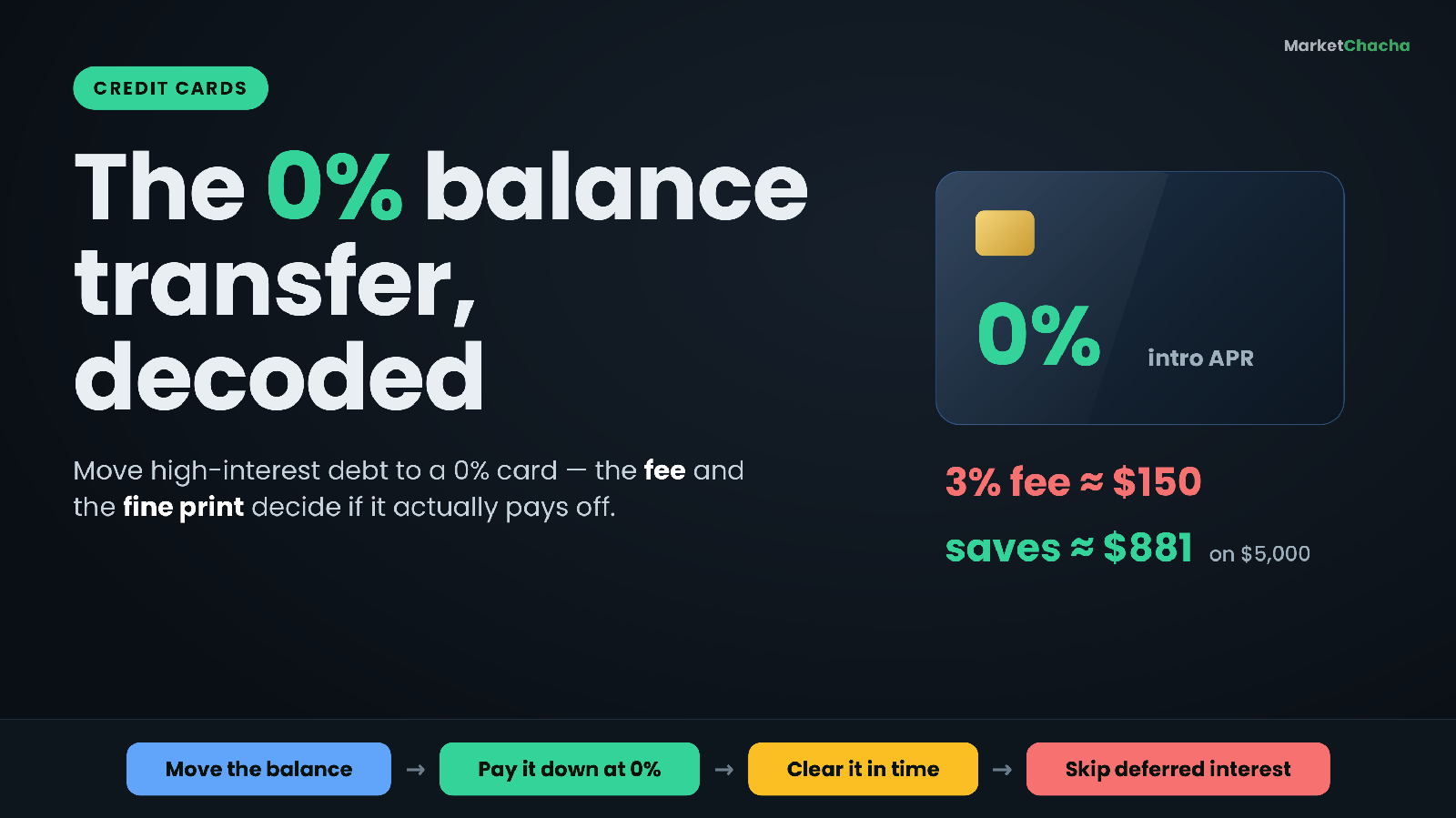
A 0% balance transfer is when you move debt from a high-interest credit card to a new card that charges no interest for a set promotional window — usually 12 to 21 months — so that every rupee or dollar you pay goes straight to knocking down the balance instead of feeding interest. In exchange, the new issuer charges a one-time transfer fee , typically 3%–5% of the amount you move. Used well, it can save you hundreds of dollars and shave months off your payoff. Used carelessly, the fee, the fine print and a couple of easy mistakes can quietly cancel the benefit. This guide explains exactly how the mechanic works, walks through the arithmetic,…

How does a 0% balance transfer actually work — and when does the interest bite?+2 more
1
ranjeet_singh
2 months ago

Debt avalanche vs snowball: which method actually pays off your debt faster?

The fastest way to clear several debts at once is to pay the minimum on every debt and then throw every spare dollar at just one of them — and the two famous strategies, the debt avalanche and the debt snowball , disagree only about which debt that one should be. The avalanche attacks your highest interest rate first, so you pay the least total interest. The snowball attacks your smallest balance first, so you get a debt fully paid off sooner and stay motivated. This guide breaks down how each works, shows the real arithmetic on a worked example, and helps you pick the one you will actually finish. The one engine both methods share Before the…

Debt avalanche vs snowball: which method actually pays off your debt faster?+2 more
0
ranjeet_singh
3 months ago

How do credit card rewards actually work — and who really pays for your cashback?

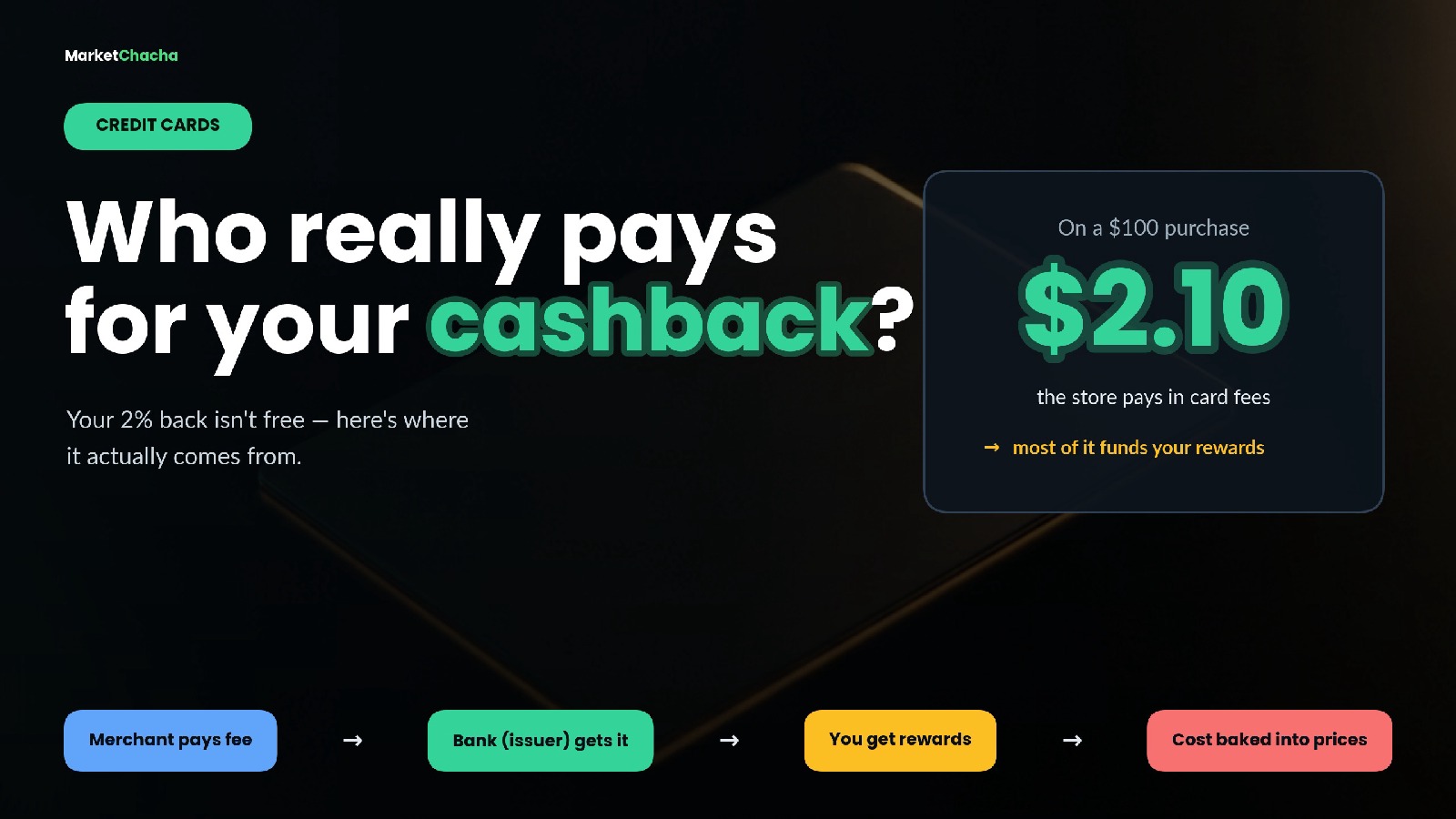
Credit card rewards are funded mainly by interchange — the "swipe fee" a merchant's bank pays your card's bank every time you pay by card. Your bank keeps some of that fee to run the card and hands a slice back to you as cashback, points or miles. So your "free" 2% back is not a gift from the bank; it is largely recycled out of the fee the store paid — and because stores tend to build that fee into their prices, a little of it is paid by everyone, including people who use cash. This guide walks through where the money actually comes from, who really foots the bill, how cashback, points and miles differ, and how to judge whethe…

How do credit card rewards actually work — and who really pays for your cashback?+2 more
0
ranjeet_singh
3 months ago

What is a credit score and how is it actually calculated? (FICO explained — plus CIBIL in India)

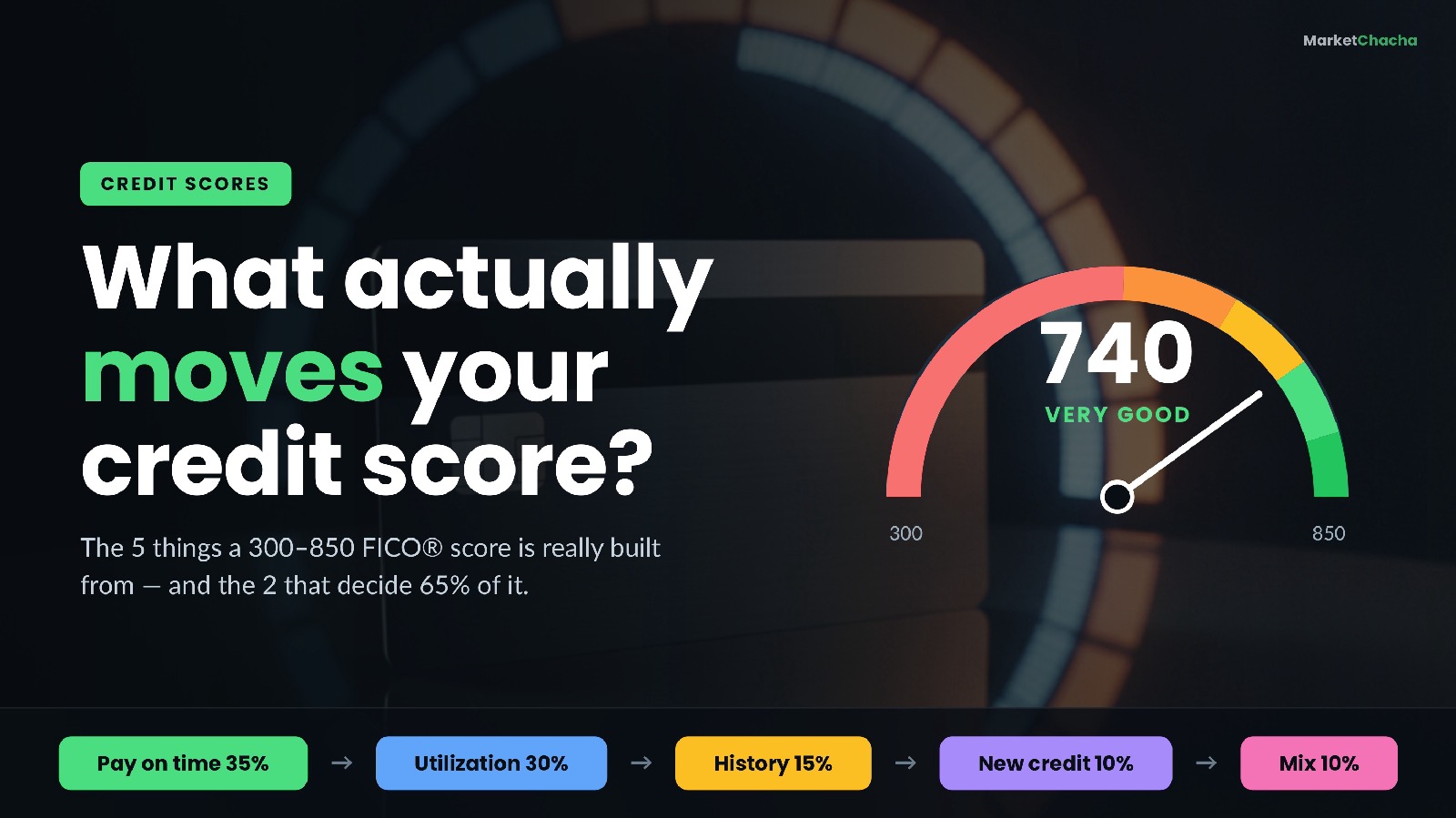
A credit score is a three-digit number — most commonly on a 300 to 850 scale in the US — that lenders use to estimate how likely you are to pay back money you borrow. It is not a judgement of you as a person or a measure of your income or savings. It is a statistical summary of your track record with borrowed money: how reliably you have paid past debts, how much you currently owe, and how you have handled credit over time. This guide explains exactly what goes into that number, walks through a worked example so you can see how one habit moves it, shows what a "good" score really means, and closes with how the same system works in Ind…

What is a credit score and how is it actually calculated? (FICO explained — plus CIBIL in India)+2 more
0
ranjeet_singh
3 months ago

How is credit card interest actually calculated — and why is paying only the minimum a trap?

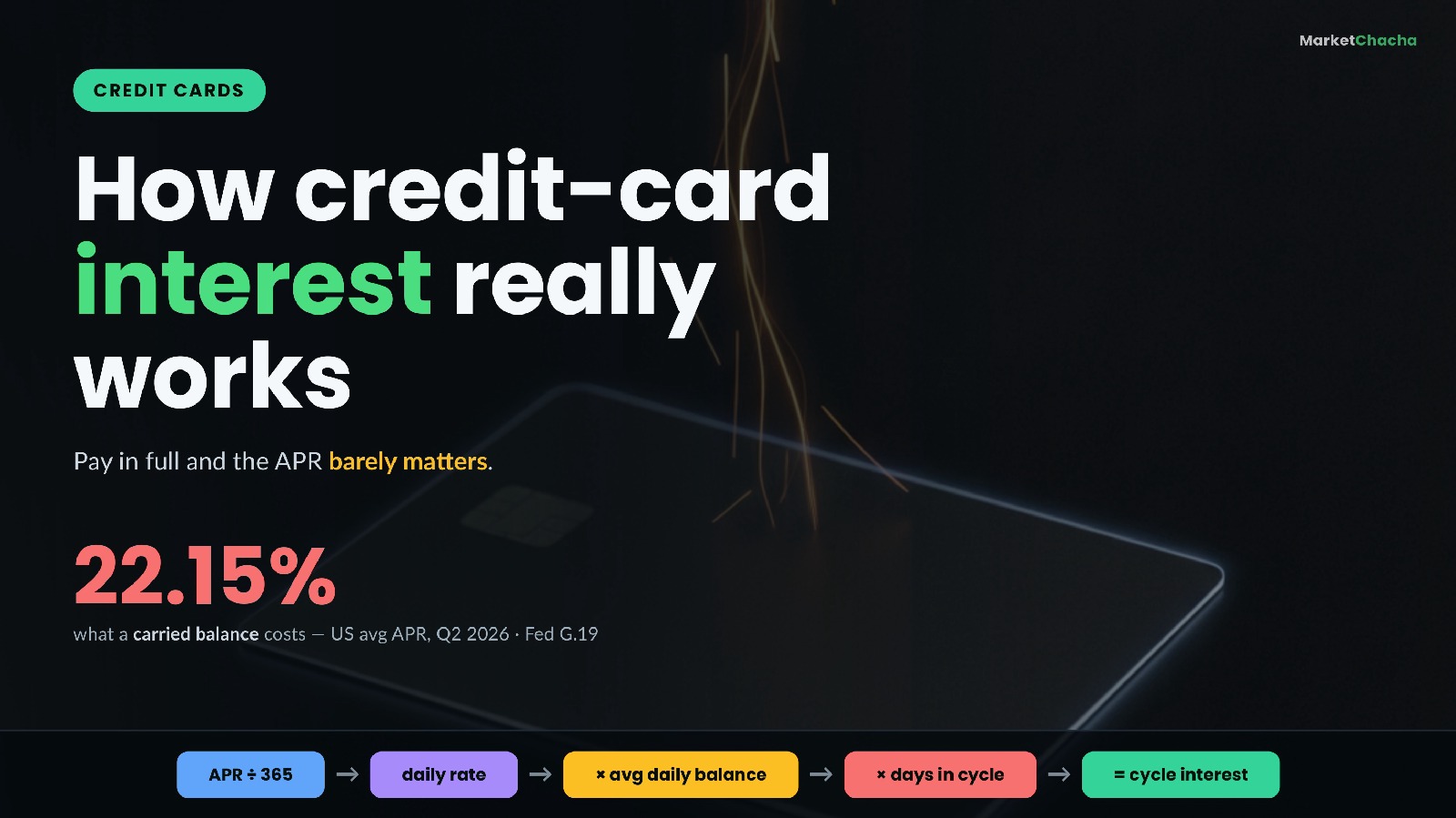
Credit card interest is the fee you pay for borrowing money on your card, and it is worked out from the balance you carry — not once a year in a lump sum, and not on your whole credit limit. Your card has an APR (Annual Percentage Rate); the issuer divides that APR by 365 to get a daily periodic rate , tracks your balance day by day through the billing cycle, and uses that to compute the interest for the cycle. The single most important thing to know: if you pay your statement balance in full by the due date, most cards charge you zero interest on purchases — so for anyone who pays in full, the APR barely matters. Interest only becomes your p…

How is credit card interest actually calculated — and why is paying only the minimum a trap?+2 more
0